Kammermusik
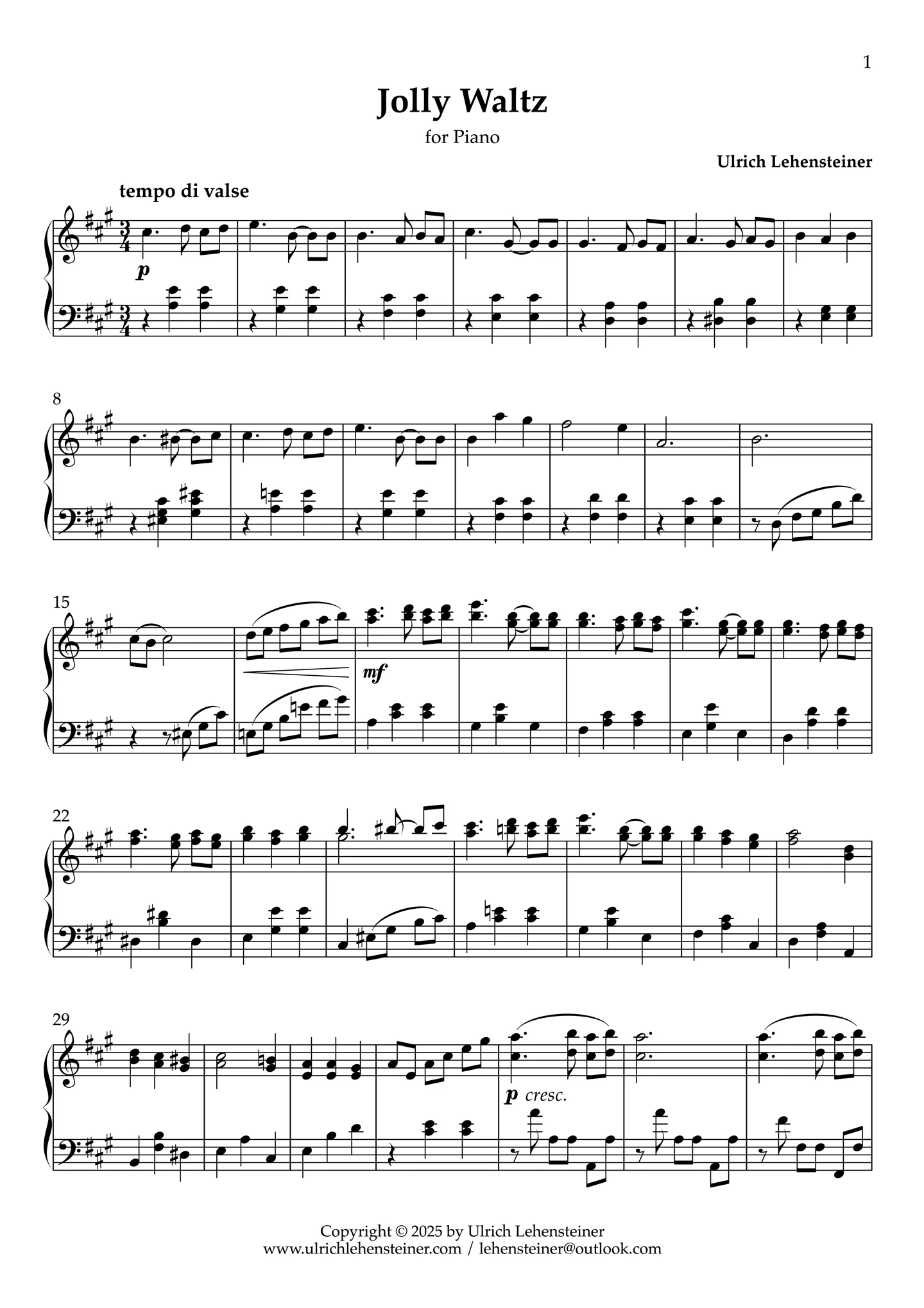
Jolly Waltz
A rhythmically-driving and upbeat waltz with many unusual syncopations and occasional harmonic shifts.
An easier version of this piece is available as well.
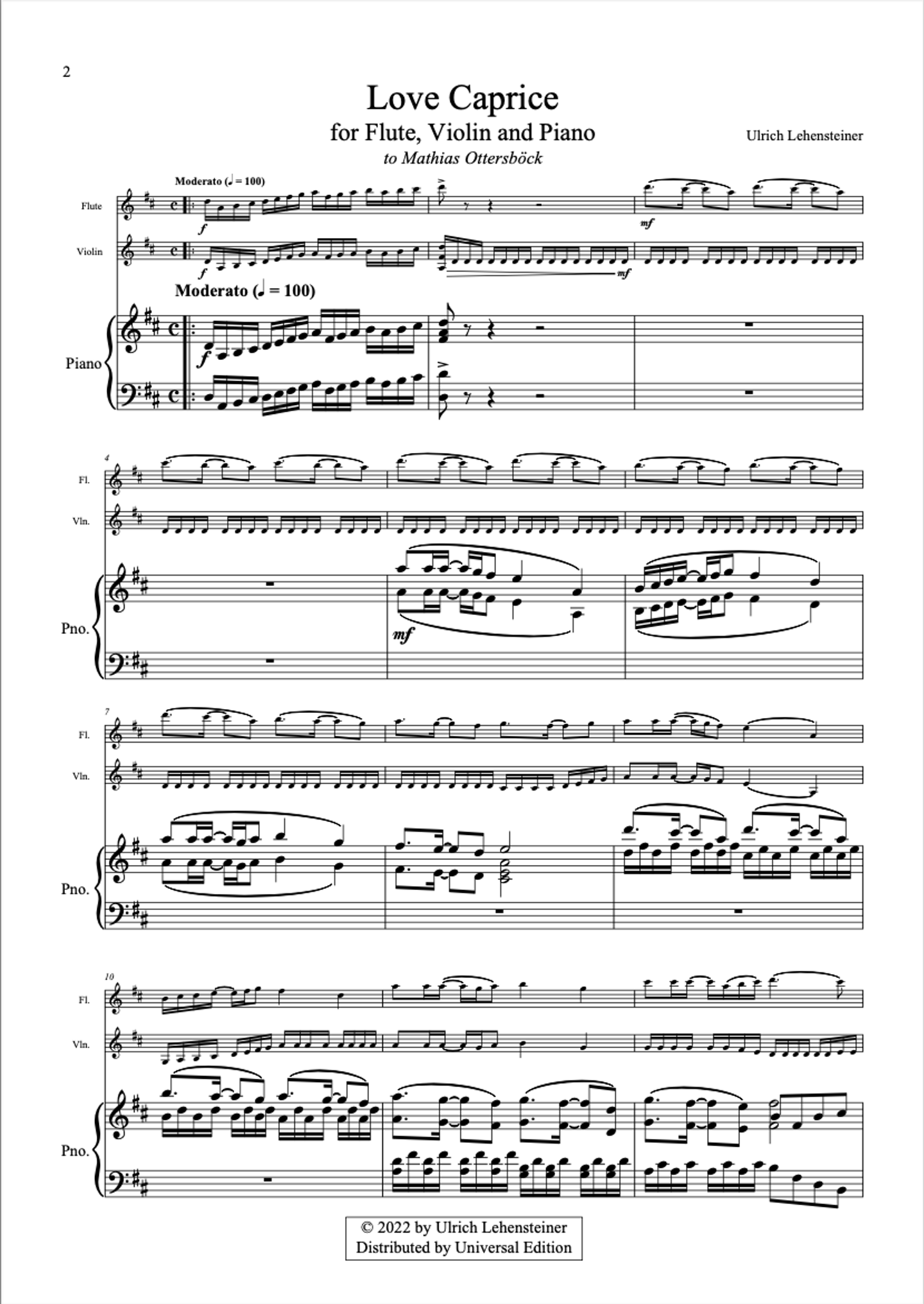
Love Caprice (Flute, Violin & Piano)
Within its rather short duration, the "Love Caprice" depicts a variety of emotional aspects of love, so it naturally does not only feature upbeat major-passages, but also both desolate and powerfully desperate minor-passages.
A version for two violins & piano is also available.
String Quartet in a minor
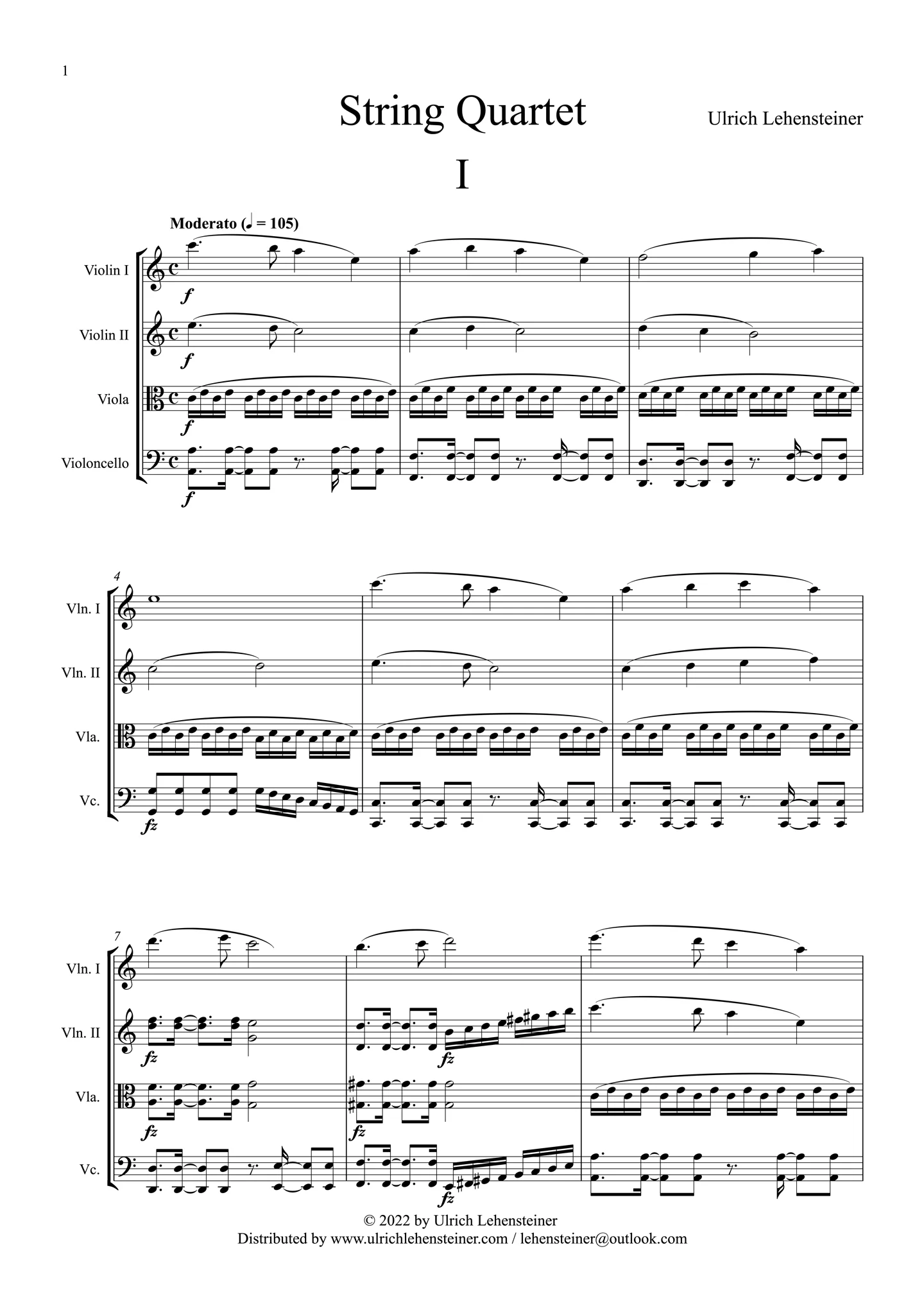
A String Quartet that challenges the traditional conception of the genre as four individual voices: It drops the conventional contrapuntal treatment of the instruments in favour of their atmospherical capabilities, thus creating vast and dynamic string-soundscapes throughout its four movements: an energetically driving, yet still somewhat lyrical opening movement, a melodically focused song-like second one (based on a New-Year-song the composer wrote on New Year's Eve 2017), a strangely energetic waltz with some unusual harmonies, and an extremely powerful and pressuring finale.
Tango Más O Menos
A Tango-like piece for piano four-hands that, as expected, starts off with the typical rhythm-pattern, but in the middle-section briefly diverts from the usual stern rhythm with a more dreamy, melodic passage.
"More or less" of a Tango, so to say.
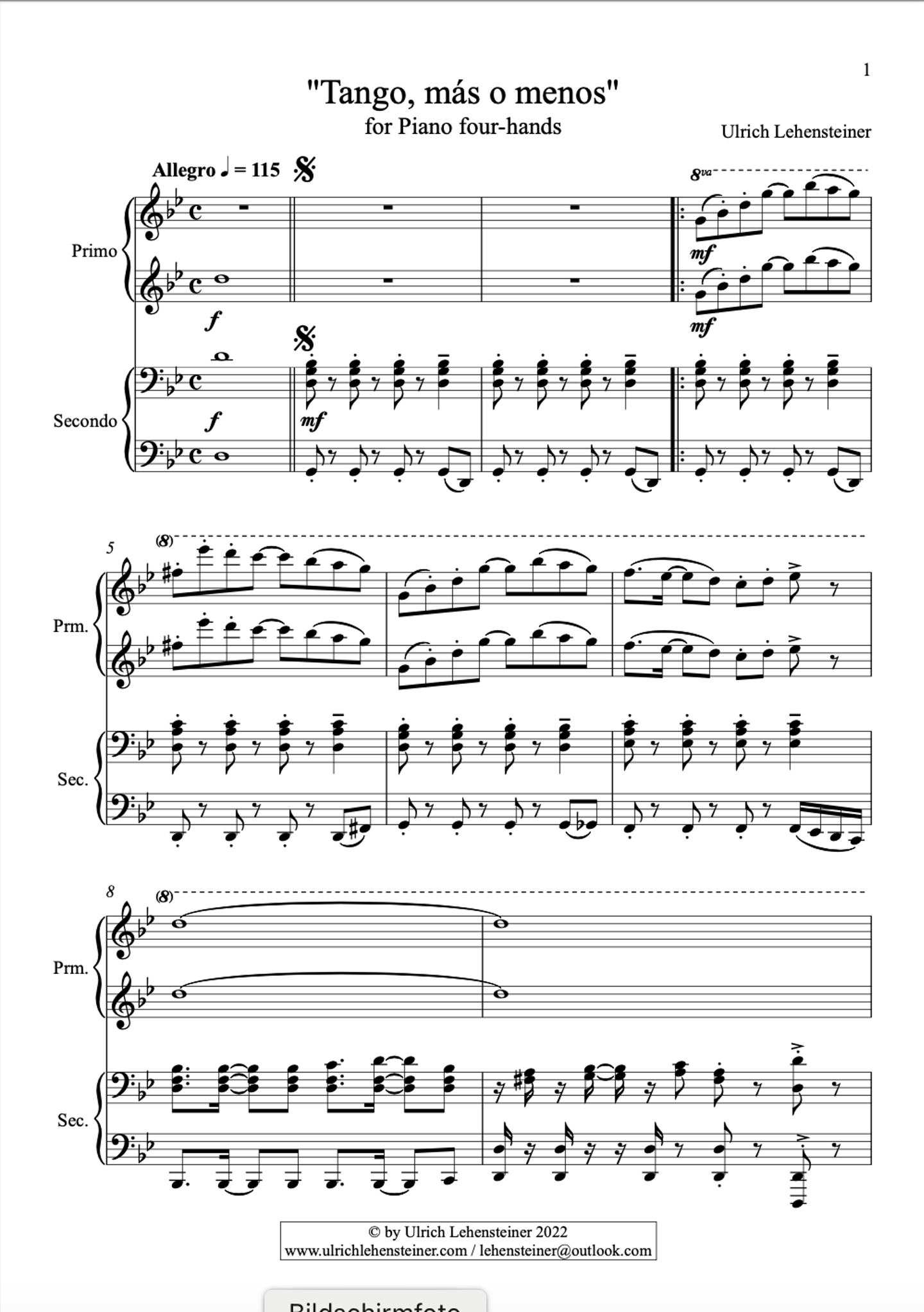
Paranormania (for Clarinet, Viola & Piano)
A collection of five musical scenes depicting several supernatural occurrences, like a stroll through a wicked witch's lair or the devil himself dancing. The emotional depth and heaviness of the trio's centrepiece, the "Vampiress' Elegy", an instrumental ballad describing the mourning over the emptiness of a neverending existence, is contrasted by other, more lighthearted, pieces like the "Spectre Dance" or the "Devilish Trepak". The powerful finale "Summoning Demons" brings this atmospherically diverse collection of pieces to a breathtaking climax, while in its forceful drive and power breaking new ground for the musical possibilities in the genre of chamber music.
A Trio that truly captures the spirit of Halloween, while on top adding an even more timeless touch.
Separate editions of all individual pieces are available as well.
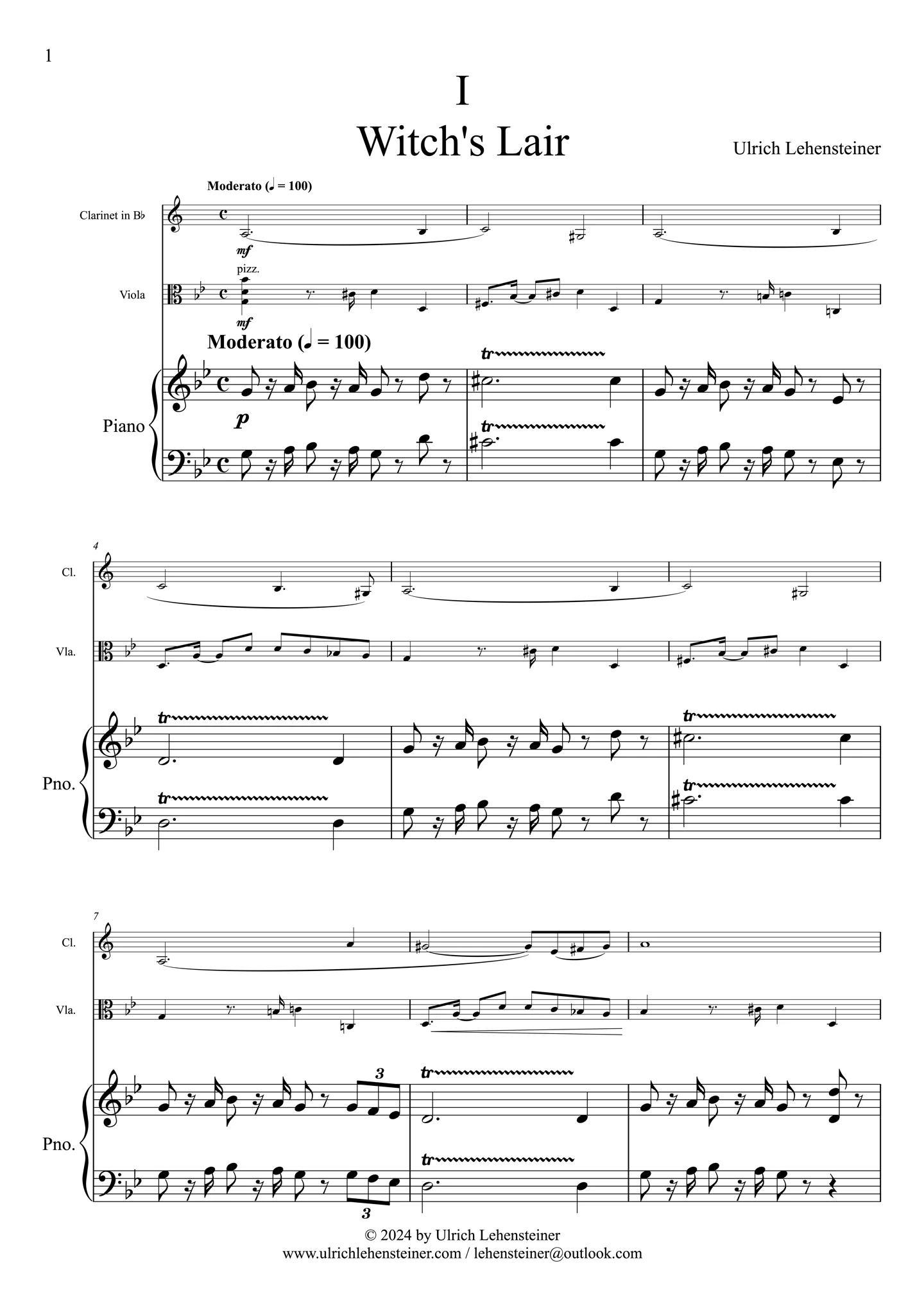
Melody of the Tides
A gently flowing piece whose continuously rising and sinking melody and accompaniment evoke the imagery of the tides brushing against a seaside cliff.
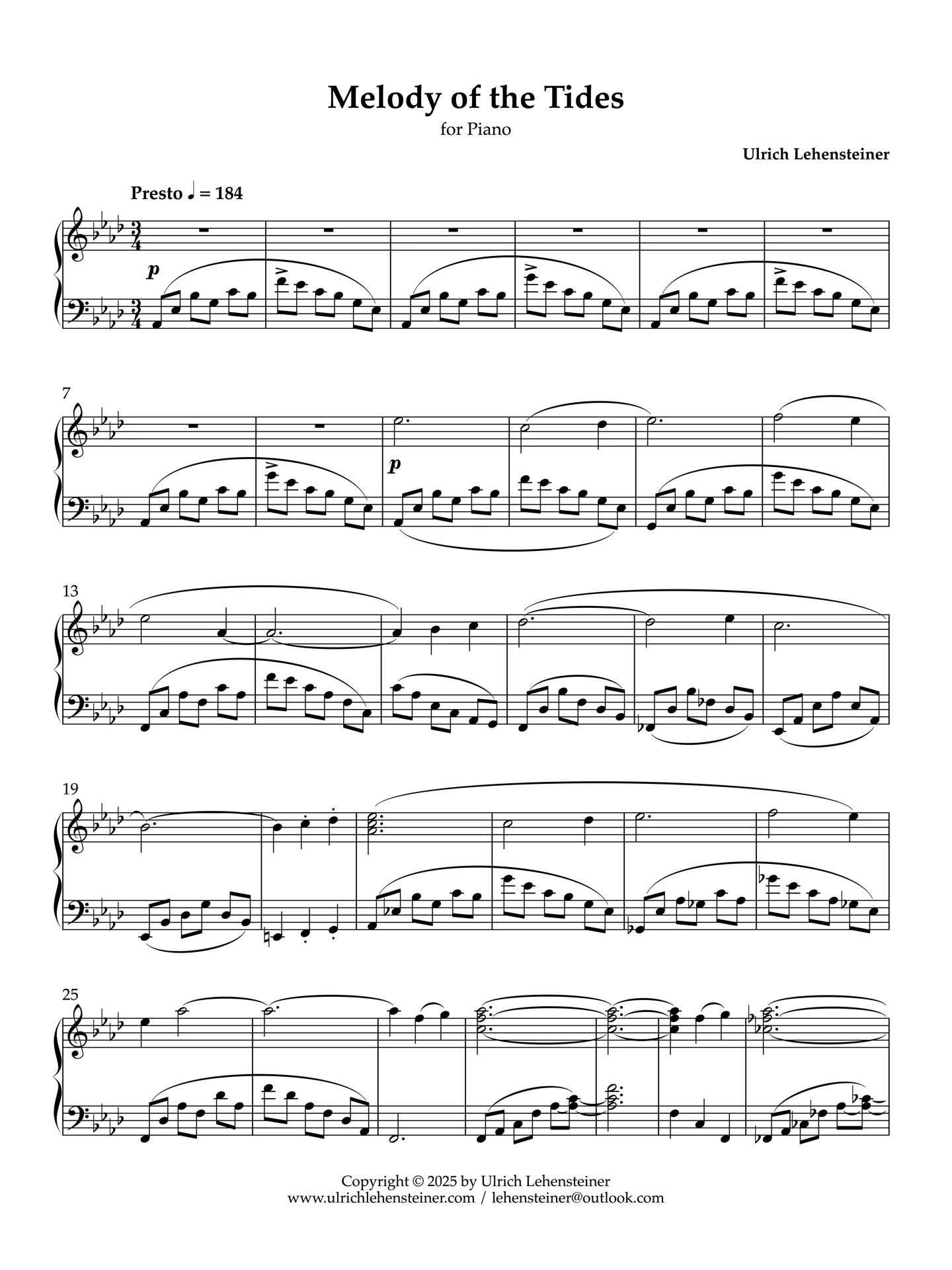
Violin Sonata in e
A radically shortened, partly Rock-inspired sonata, foregoing the traditional middle-movement in order to focus on the duality of the two outer ones: a gloomy, march-like movement that exaggerates the classic Alberti bass to a powerful rhythm-line, followed by a relentlessly pushing high-energy-movement that makes the Rock-influence apparent with its rhythmically focused main theme, continuously driving bass line and ostinato rhythm patterns.
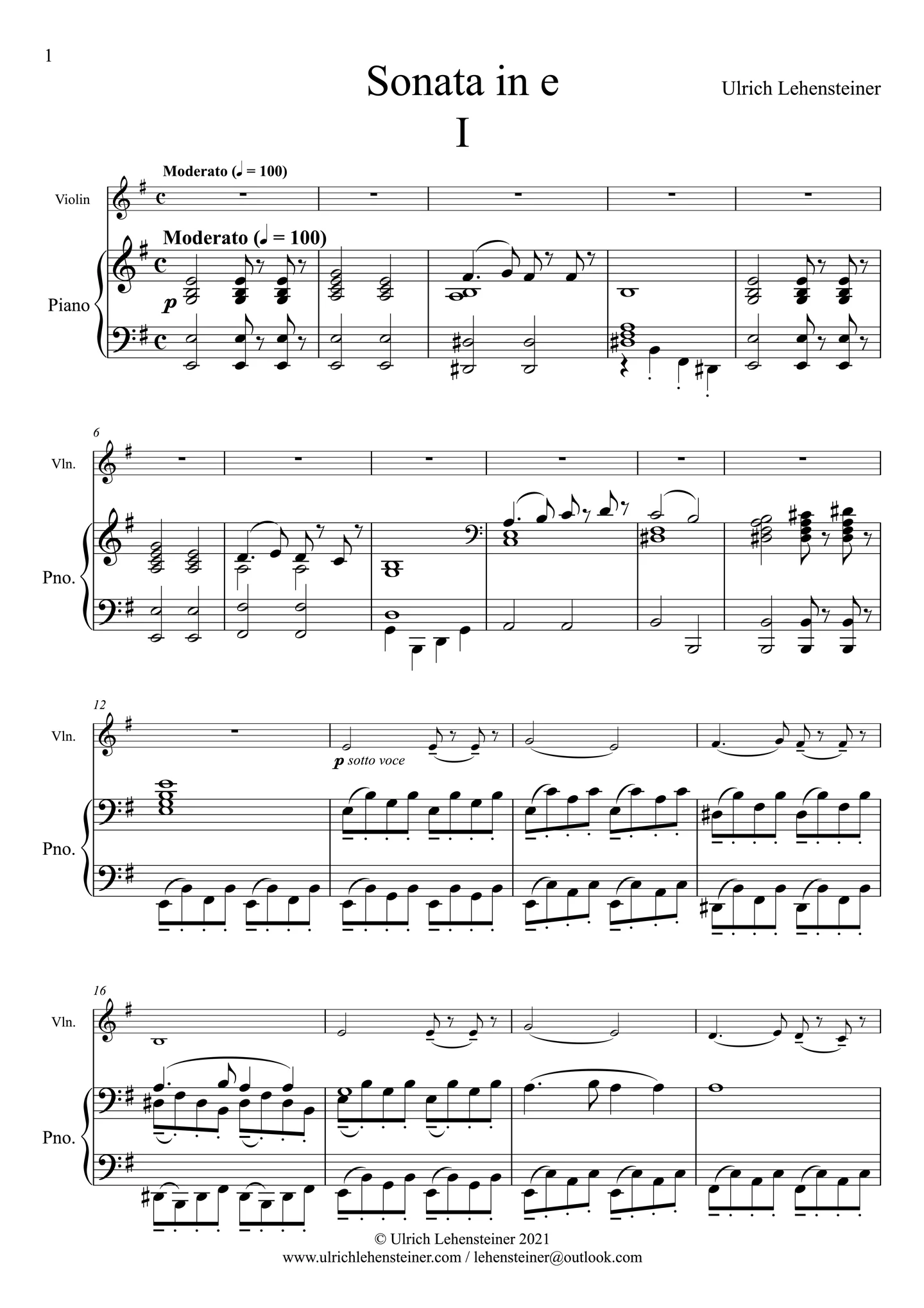
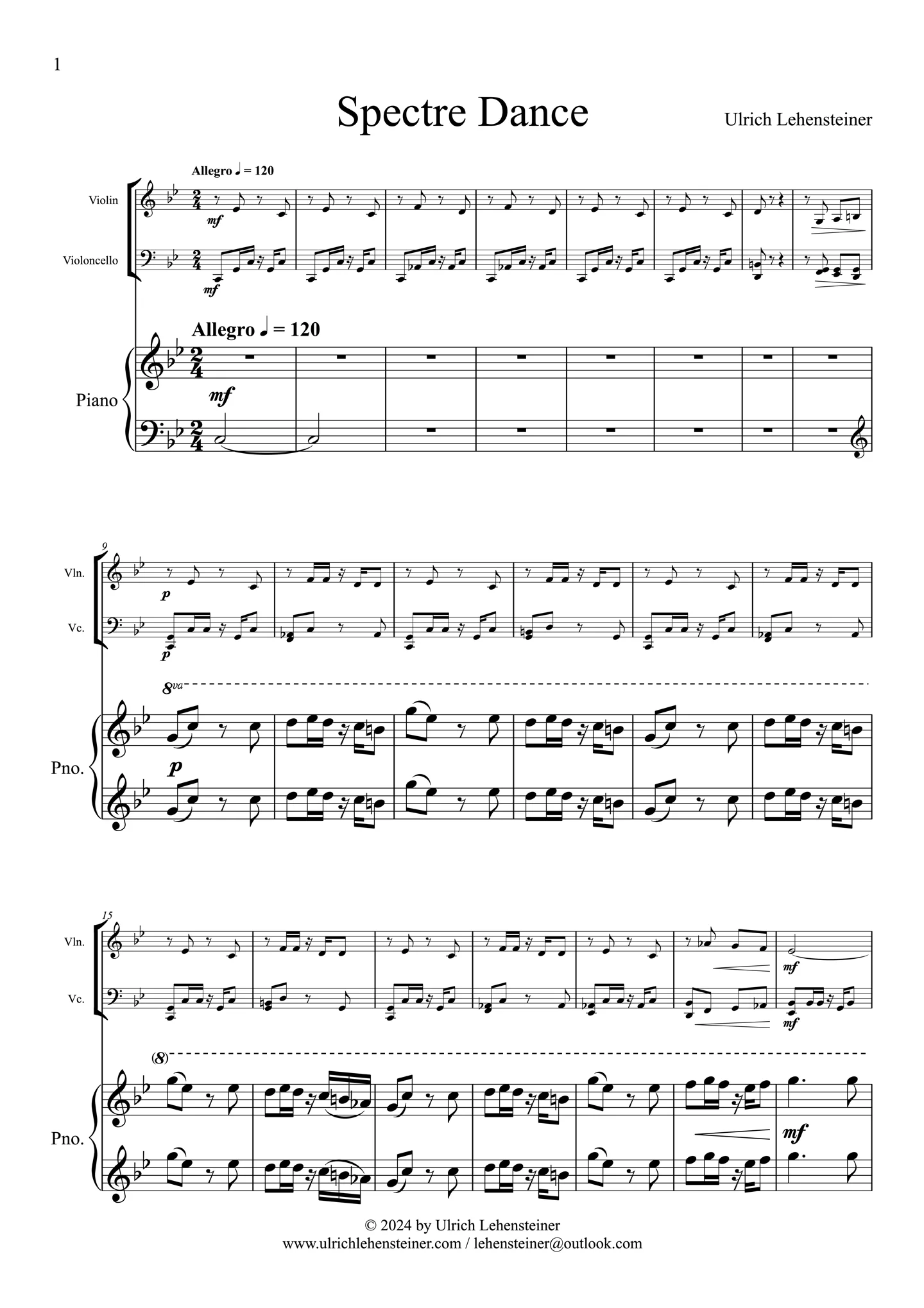
Spectre Dance (from the "Paranormania"-Trio)
The second of the two dance-movements in the "Paranormania"-Trio, that (in reference to the slavic myths of the "Wila") depicts a group of ghostly figures gathering around a person and forcing them to dance and play themself into a breathless frenzy.
Featuring an upbeat syncopated dance-rhythm and a constant switch between two different themes and tempos, this ghostly dance steadily increases its emotional intensity, so much so that the instrumentalists even get "out of tune" at one point. After a short planned tuning-break a sort of anti-climax is reached at the end, where all the building-up culminates in an almost sarcastic, morendo-like fadeout.
Available for the following setups:
Clarinet, Viola & Piano
Violin, Cello & Piano
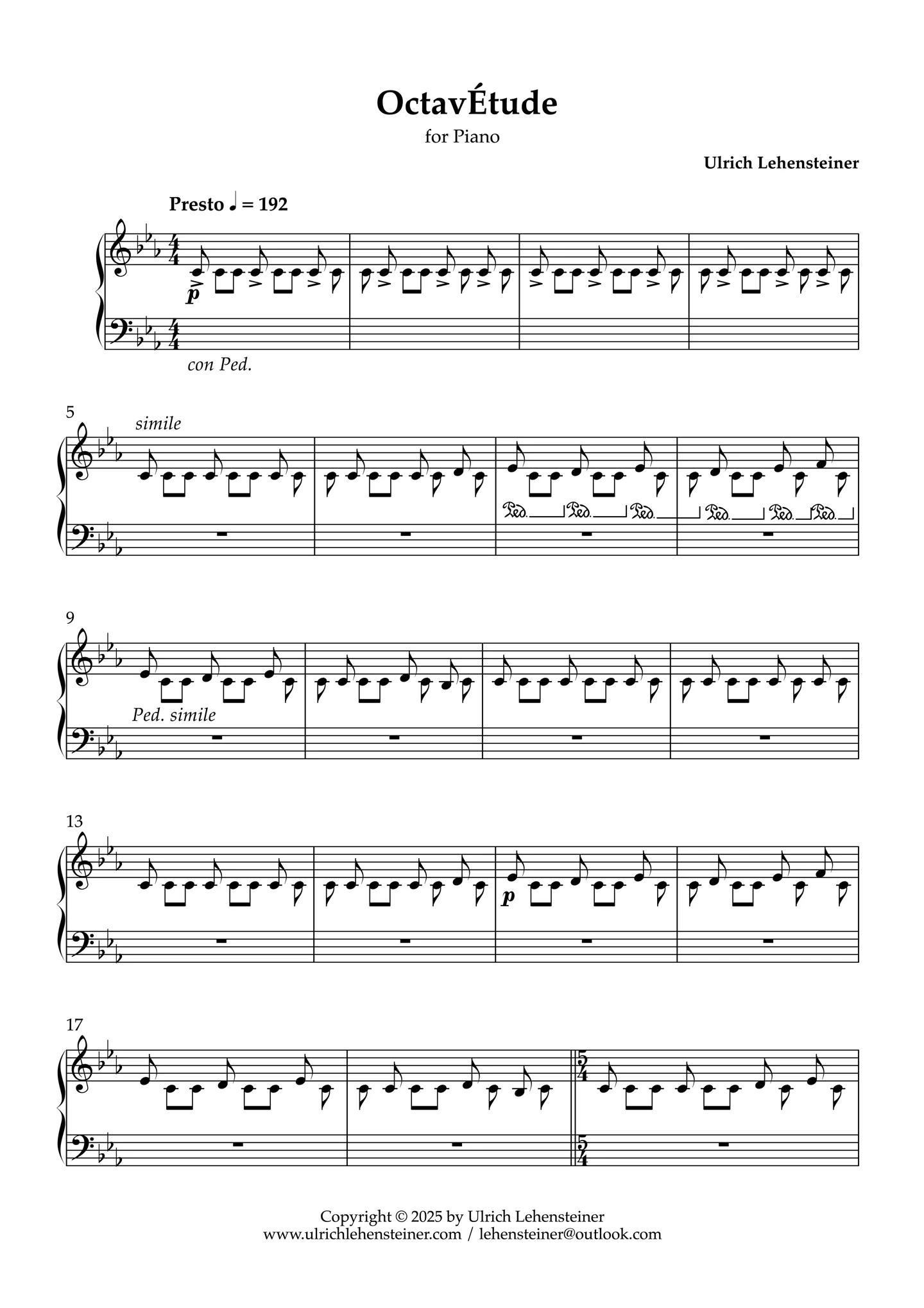
OctavÉtude
An ecstatically aggressive piano-etude focused on octave-playing that not only teaches octave-playing, but also musical anger-management by exploring the more forceful and percussive qualities of the instrument. The misleadingly tame beginning in unisons (the octave's inversion) is quickly replaced by boisterous octave-doublings in all registers across the wide range of the instrument.
Not only does this etude require a certain technical skill, but also great physical stamina to maintain the high level of energy that is demanded almost throughout the entire piece.
After completing this etude, the pianist has definitely mastered octave-playing.
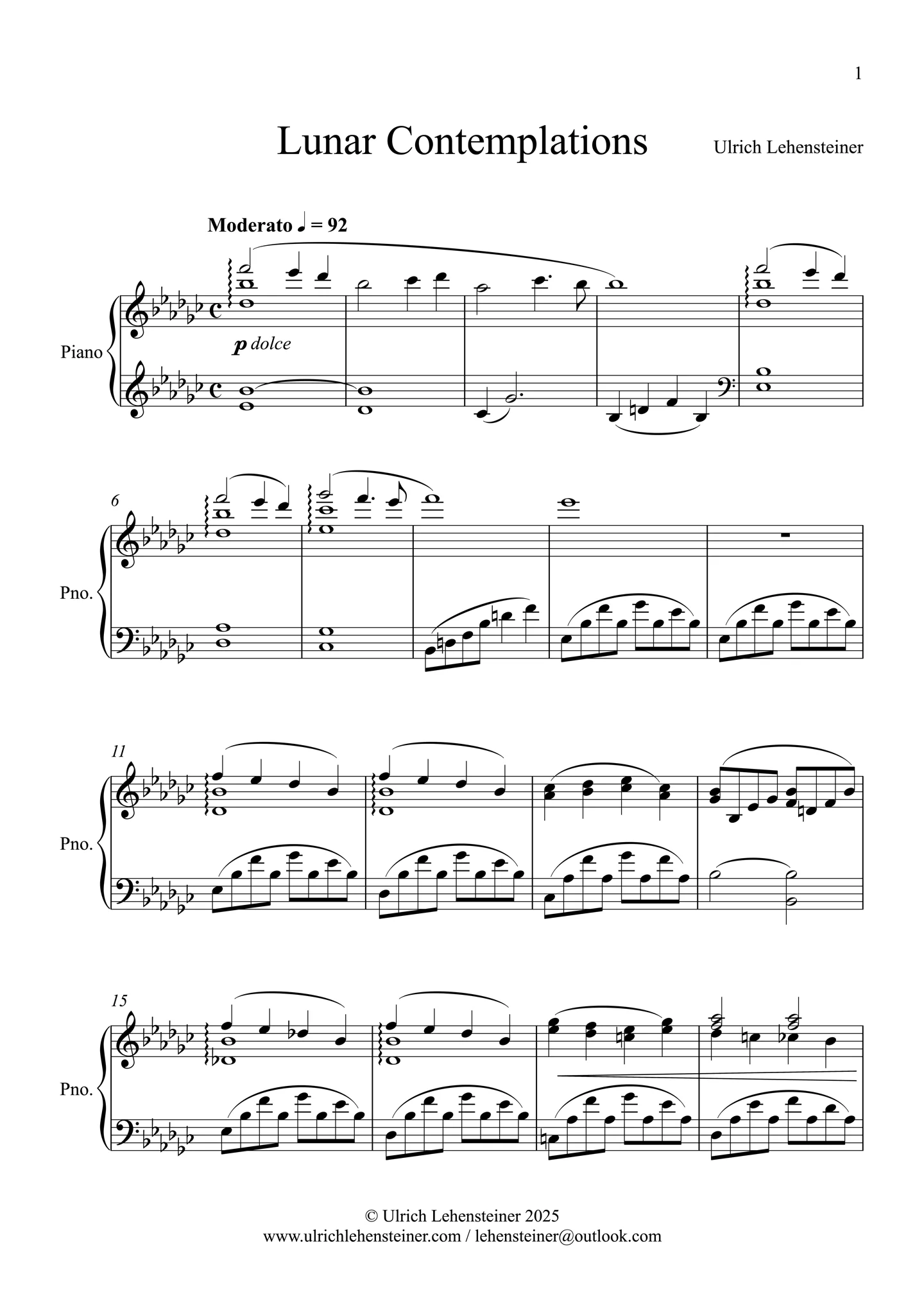
Lunar Contemplations
"Lunar Contemplations" is a simple and somber piano-piece expressing, quite like a traditional romantic "Nocturne", the feeling of looking up into the starry night-sky from your bedroom-window on a quiet evening.
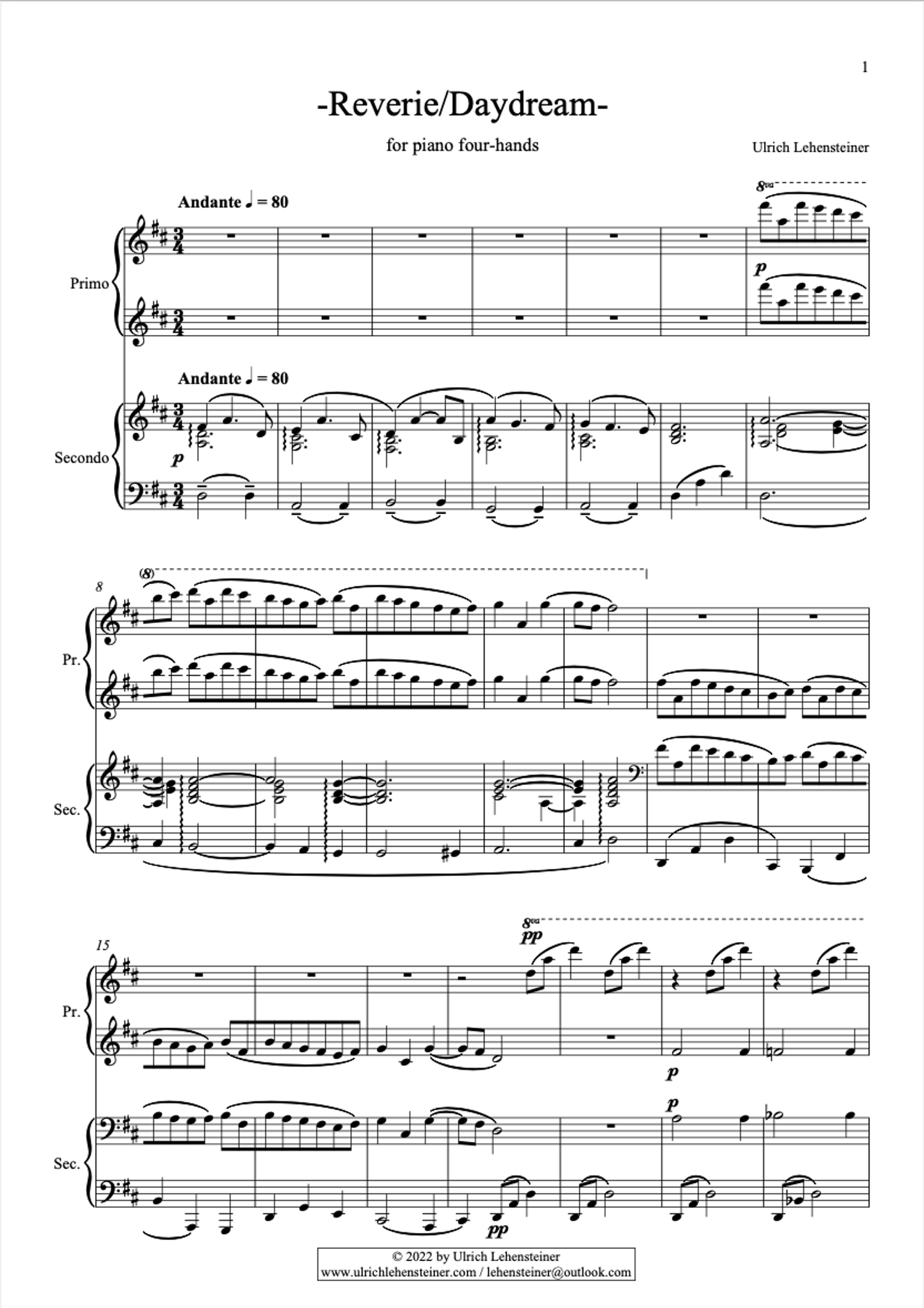
Reverie/Daydream
This short and easy-to-play piece for piano four-hands was inspired by the surreal atmosphere of the track "Spirit Crucible Elpys" from Xenoblade Chronicles 2, and features some unusual harmonic shifts in its overall dreamy atmosphere, showing that even the most light-hearted daydreams can take some unexpected turns.
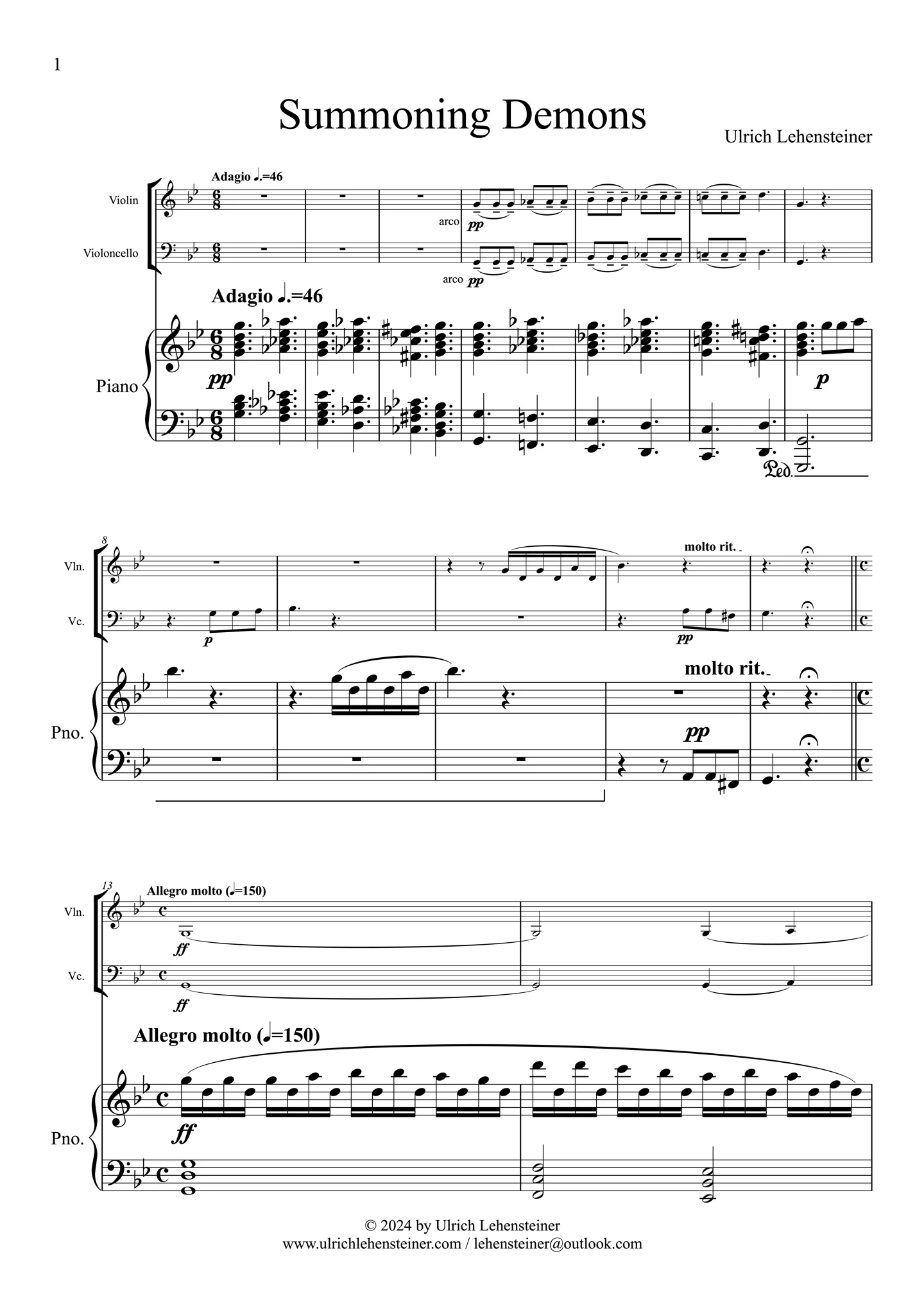
Summoning Demons (from the "Paranormania"-Trio)
The dramatic finale of the "Paranormania"-Piano Trio. Its overwhelming drive and pressing tempo evokes the imagery of demonic forces being unleashed upon the listener. After a short, misleadingly calm introduction the main bariolage-theme sets off and is later repeated several times in between recapitulations of all the previous movements' themes, who are continuously being pushed towards an exuberant climax, before the final piano-chords are literally smashing down any potential leftover demonic forces.
A piece that not only in its technical demand but also in its relentlessly maintained drive pushes the boundaries of conventional listening.
Available for the following setups:
Clarinet, Viola & Piano
Violin, Cello & Piano
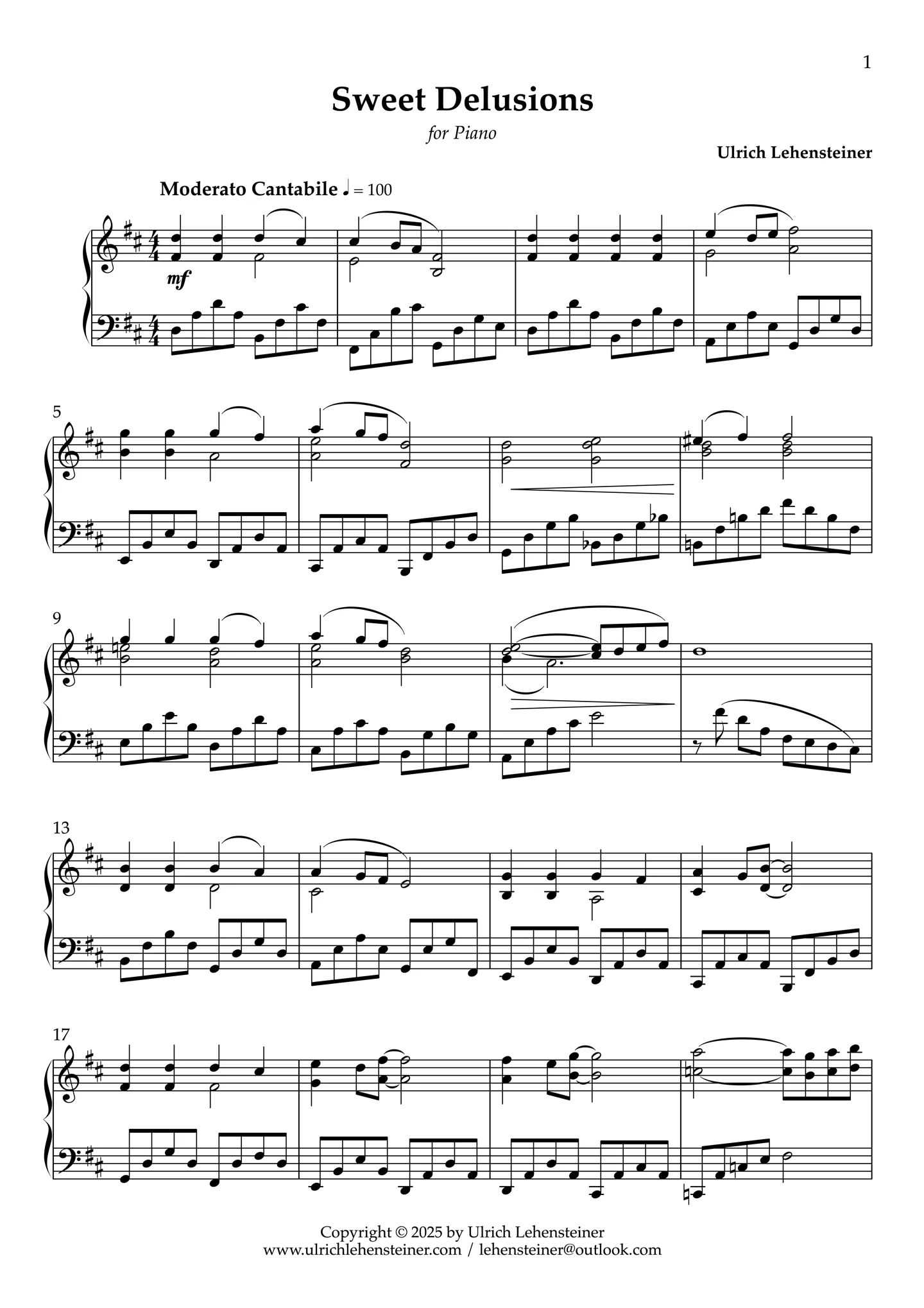
Sweet Delusions
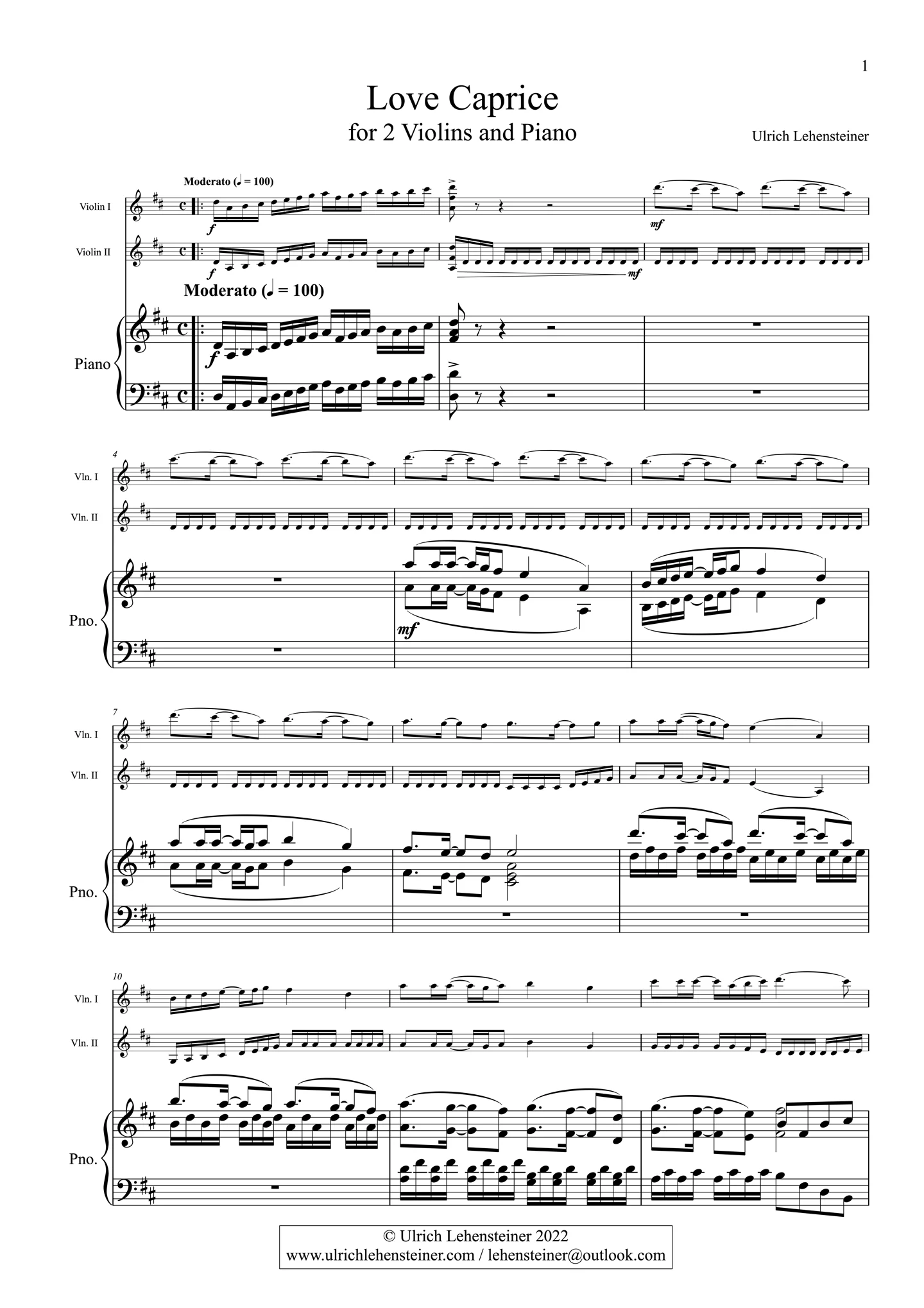
Love Caprice (2 Violins & Piano)
Within its rather short duration, the "Love Caprice" depicts a variety of emotional aspects of love, so it naturally does not only feature upbeat major-passages, but also both desolate and powerfully desperate minor-passages.
A version for flute, violin & piano is also available.
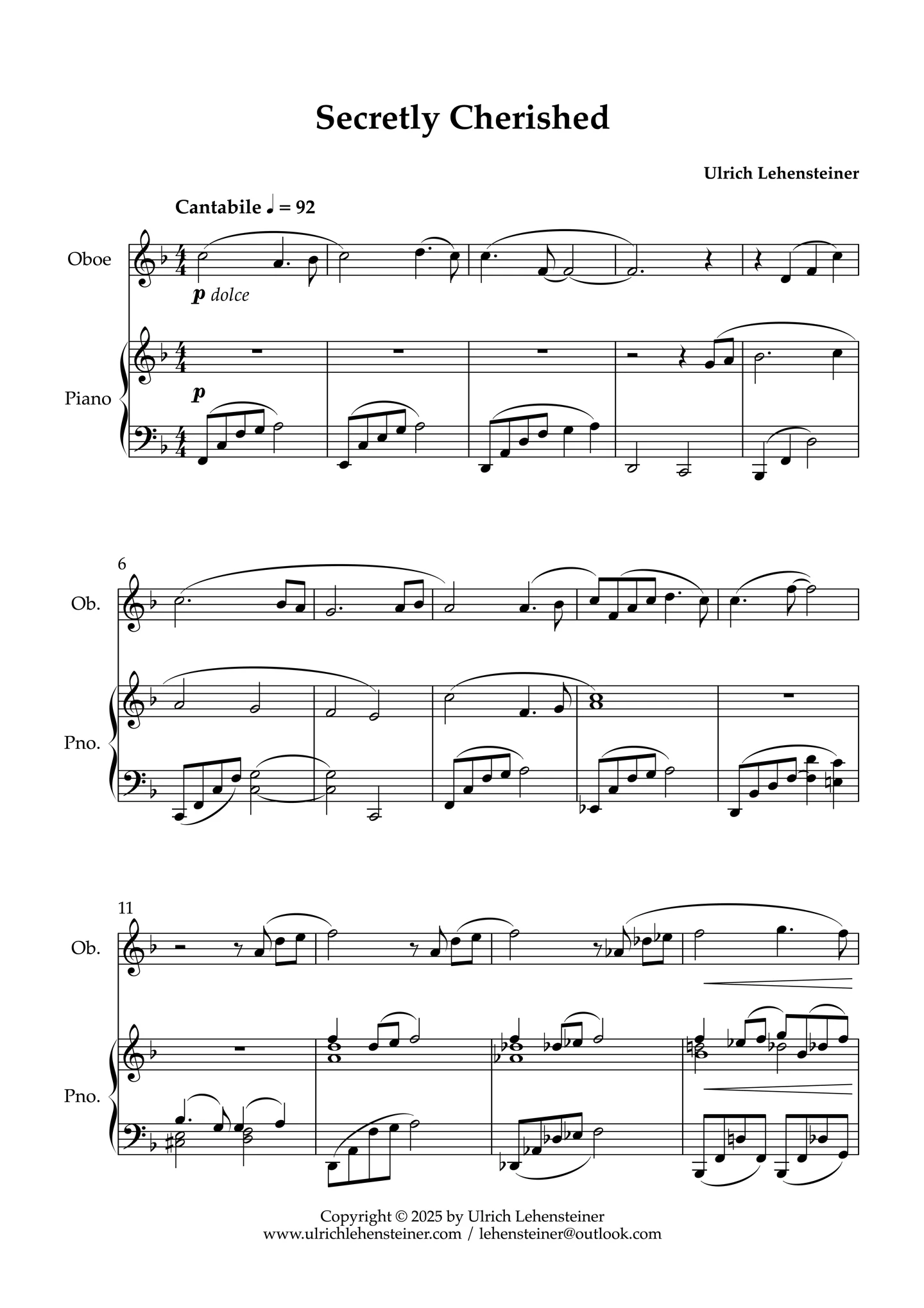
Secretly Cherished (Oboe & Piano)
A delightfully simple and tuneful piece with an easy oboe-part, ideal for beginners on that instrument.
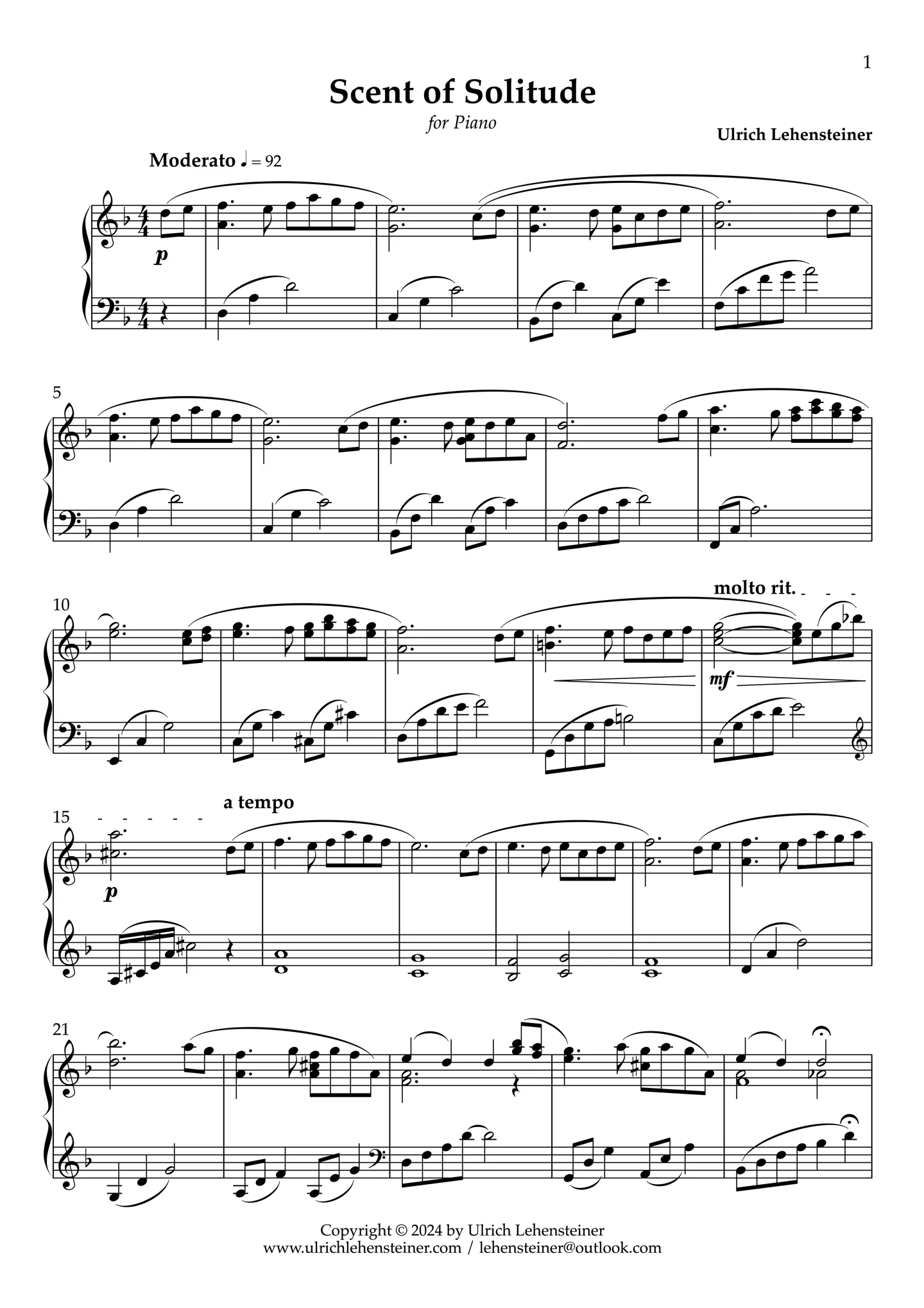
Scent of Solitude
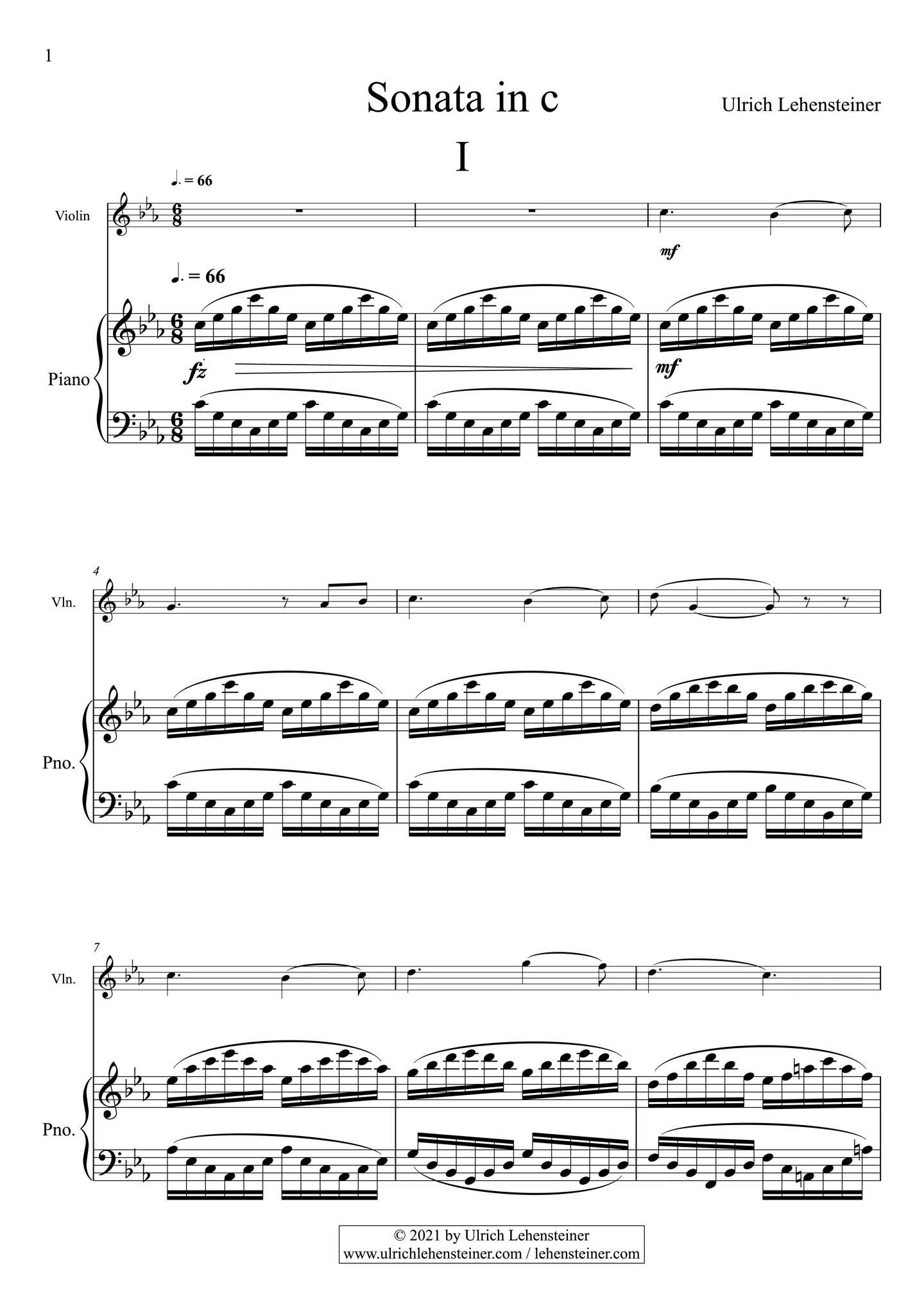
Violin Sonata in c
A very dark and tumultuous piece of chamber music, with only a few bright moments.
The ominously drifting mood of the first movement is only briefly interrupted by the dreamy waltz of the second movement, followed up with an absolute forced march a finale that blasts through from start to finish with the highest energy possible. The virtuosity of the sonata lies not so much in the technically difficult figures, but in maintaining that high level of energy demanded by incessant rhythms and constant fortes throughout the entire piece.
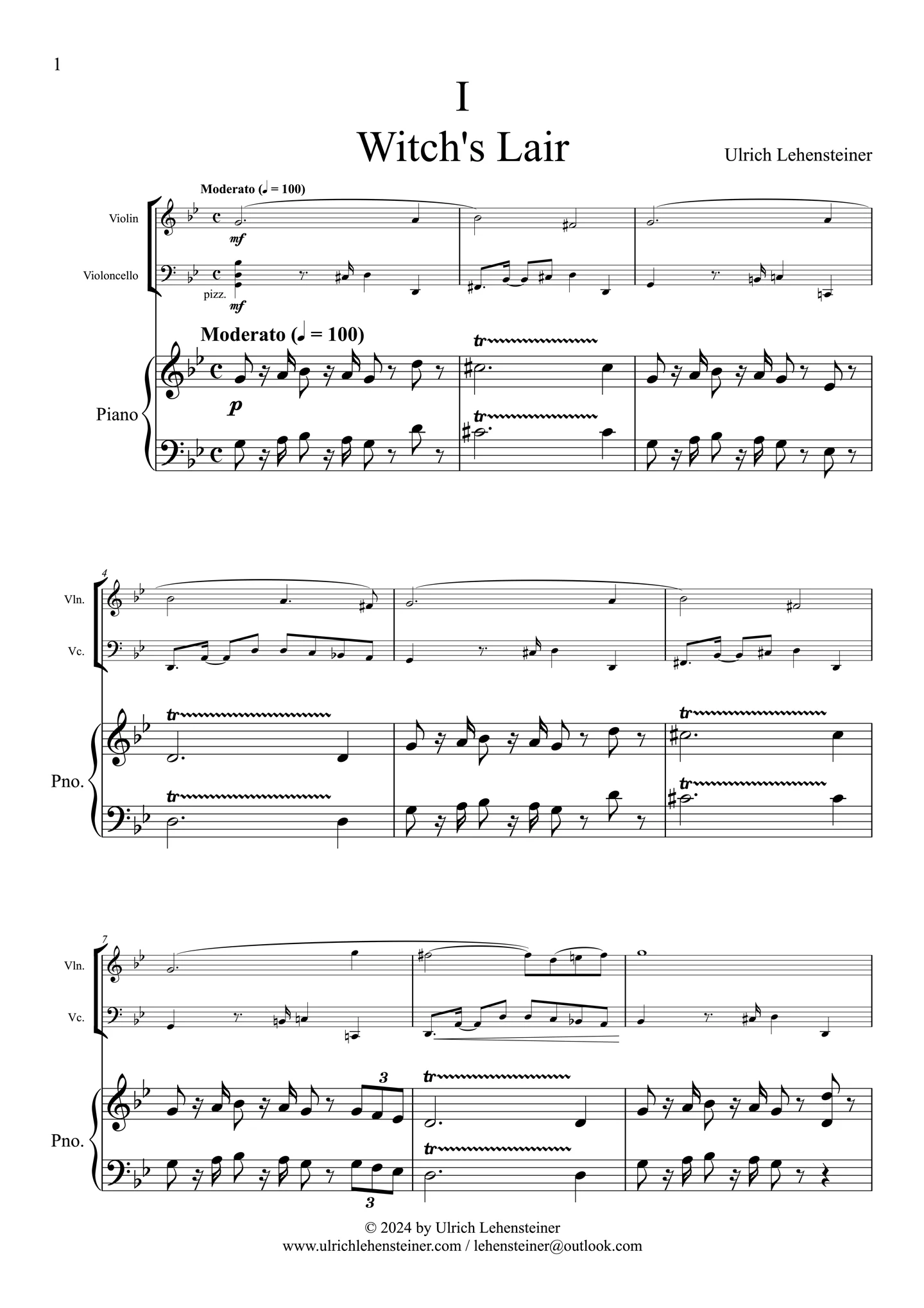
Paranormania (for Violin, Cello & Piano)
A collection of five musical scenes depicting several supernatural occurrences, like a stroll through a wicked witch's lair or the devil himself dancing. The emotional depth and heaviness of the trio's centrepiece, the "Vampiress' Elegy", an instrumental ballad describing the mourning over the emptiness of a neverending existence, is contrasted by other, more lighthearted, pieces like the "Spectre Dance" or the "Devilish Trepak". The powerful finale "Summoning Demons" brings this atmospherically diverse collection of pieces to a breathtaking climax, while in its forceful drive and power breaking new ground for the musical possibilities in the genre of chamber music.
A Trio that truly captures the spirit of Halloween, while on top adding an even more timeless touch.
Separate editions of all individual pieces are available as well.
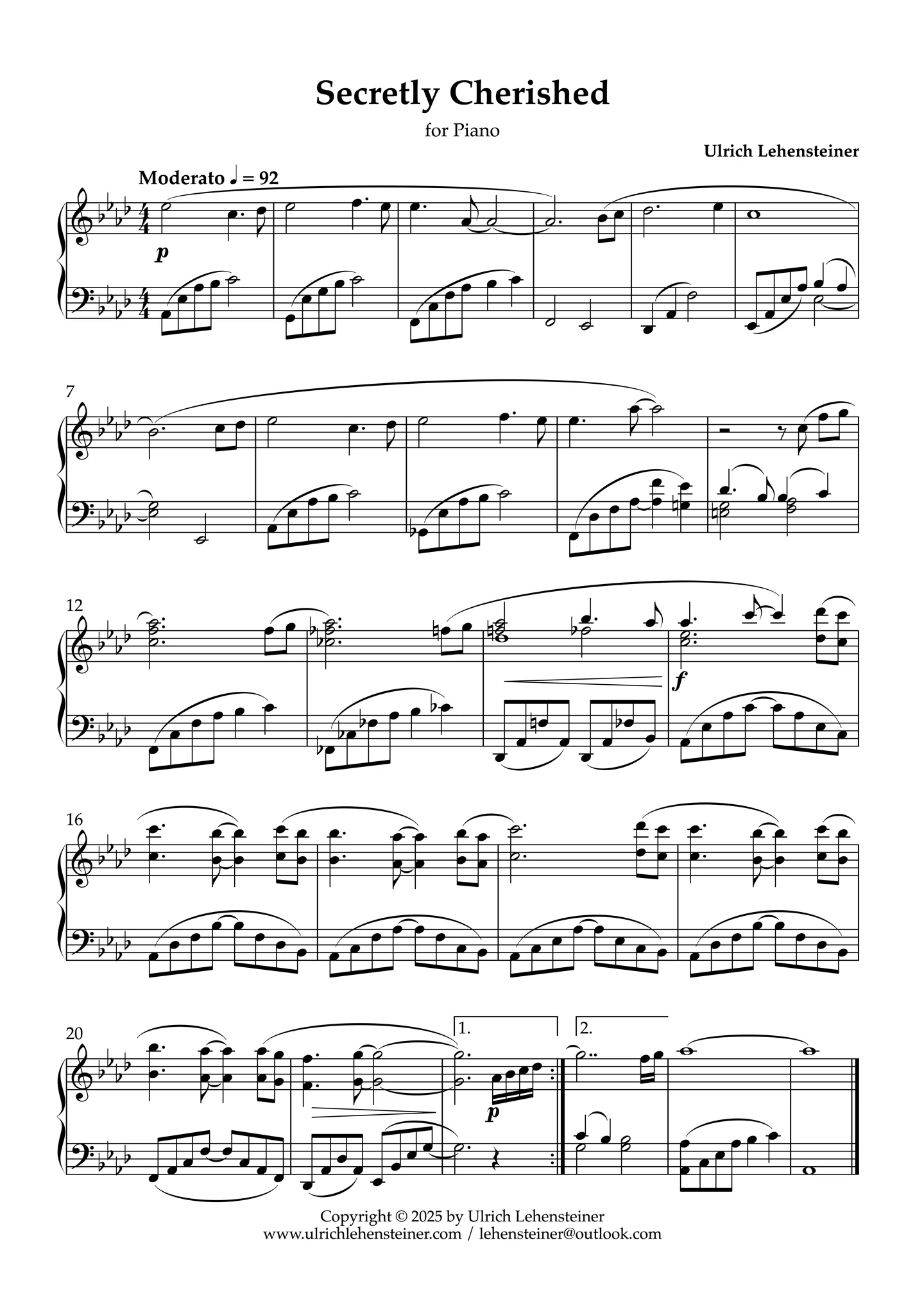
Secretly Cherished
An easy-to-play, tuneful piano piece.
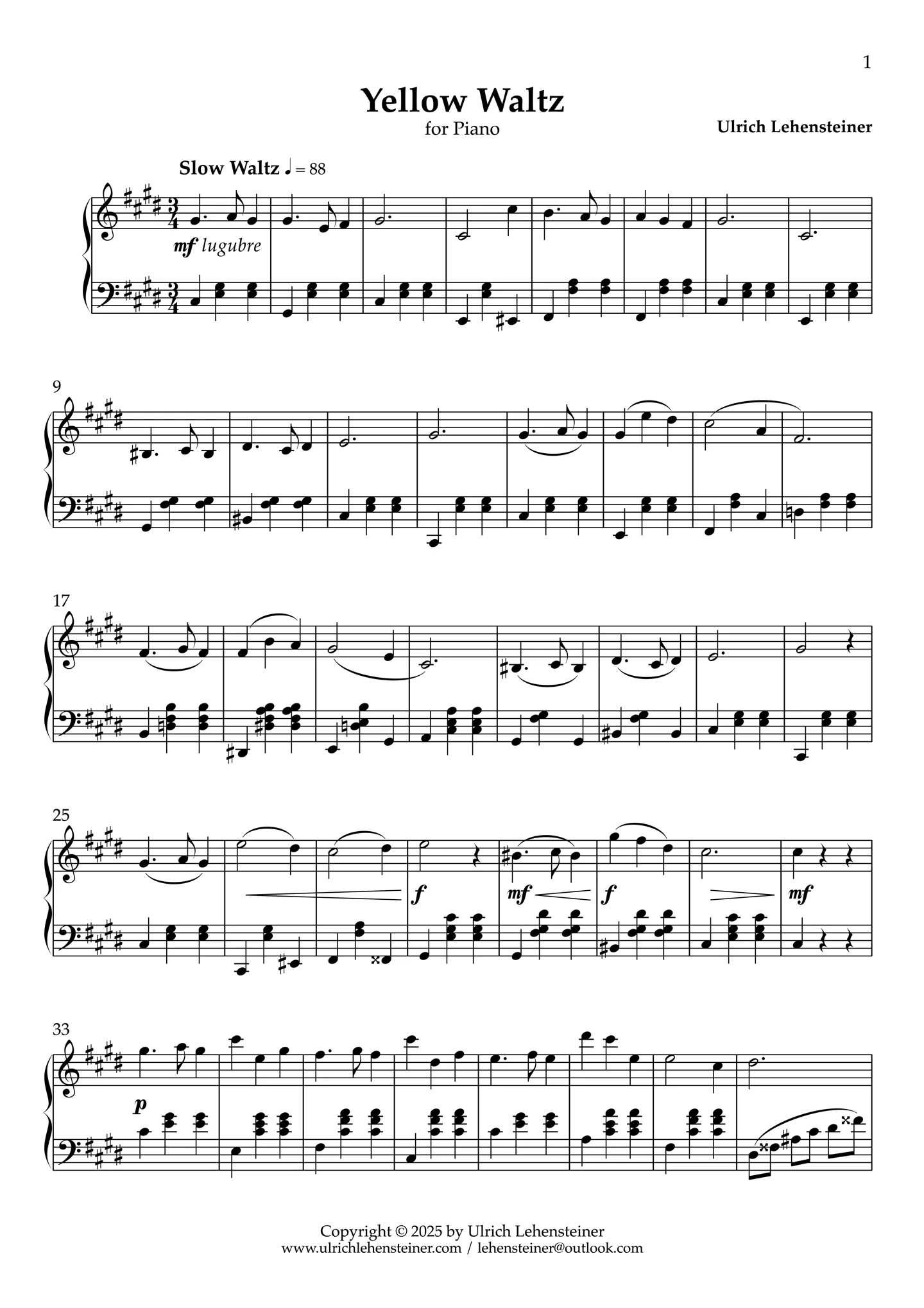
Yellow Waltz
A melancholic slow waltz, featuring a lugubrious, Sicilienne-like melody in a continuous dotted rhythm.
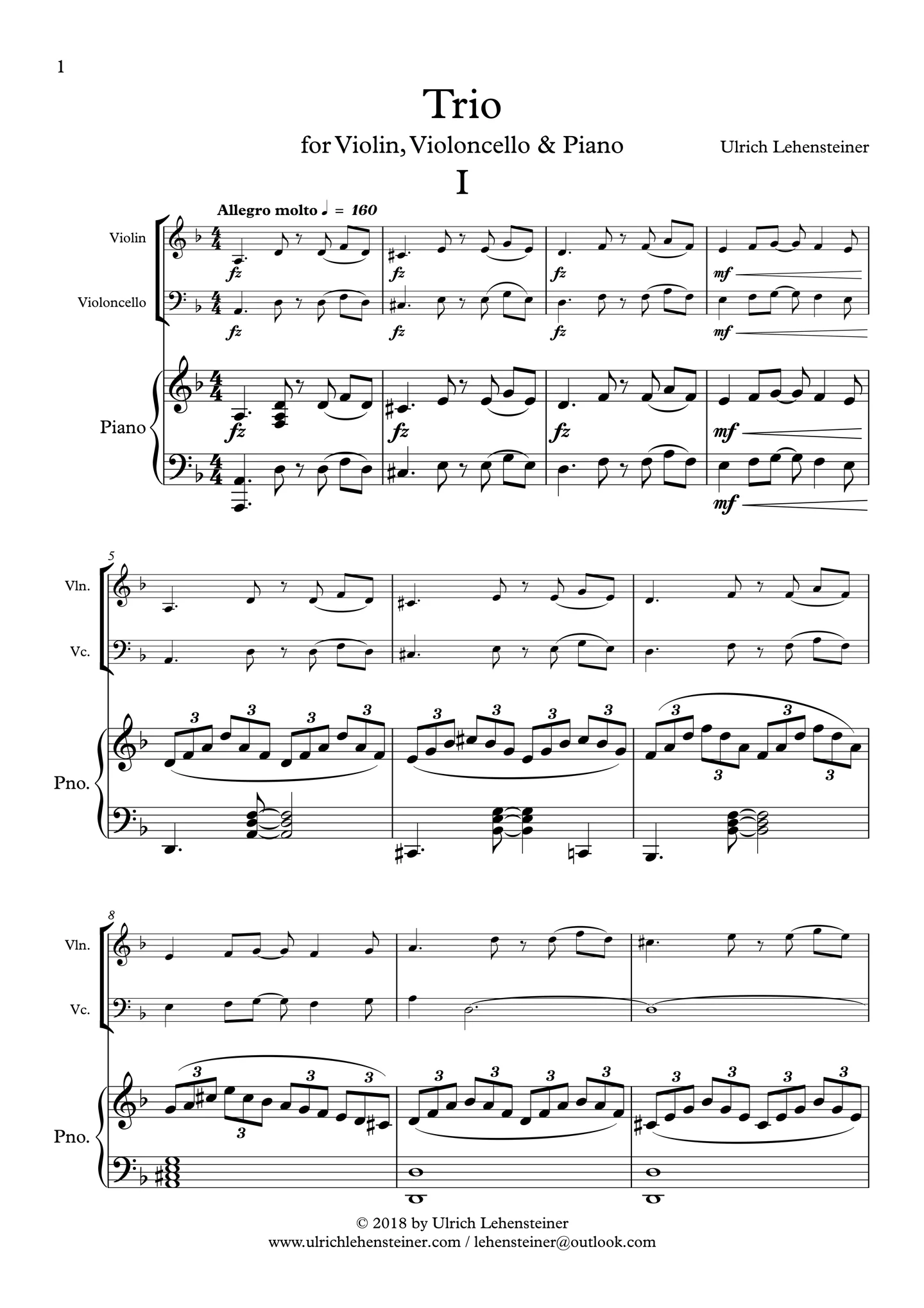
Piano Trio in d-minor
A classically rooted Piano Trio in three movements that in its musical expressiveness exceeds the formal conventions of the genre. The first one's high level of drive and energy that is established right from the start is built up by its syncopated rhythms and contrast between two very different themes in terms of metre and tempo.
The introverted second movement turns the established atmosphere upside down with its delicately arpeggiated theme that is then steadily raised to a triumphantly exuberant climax.
The Trio closes - in typical Lehensteiner-fashion - with a bold and energetic Waltz that in itself is full of harsh and unexpected twists that are to be expected from a Lehensteiner-piece.
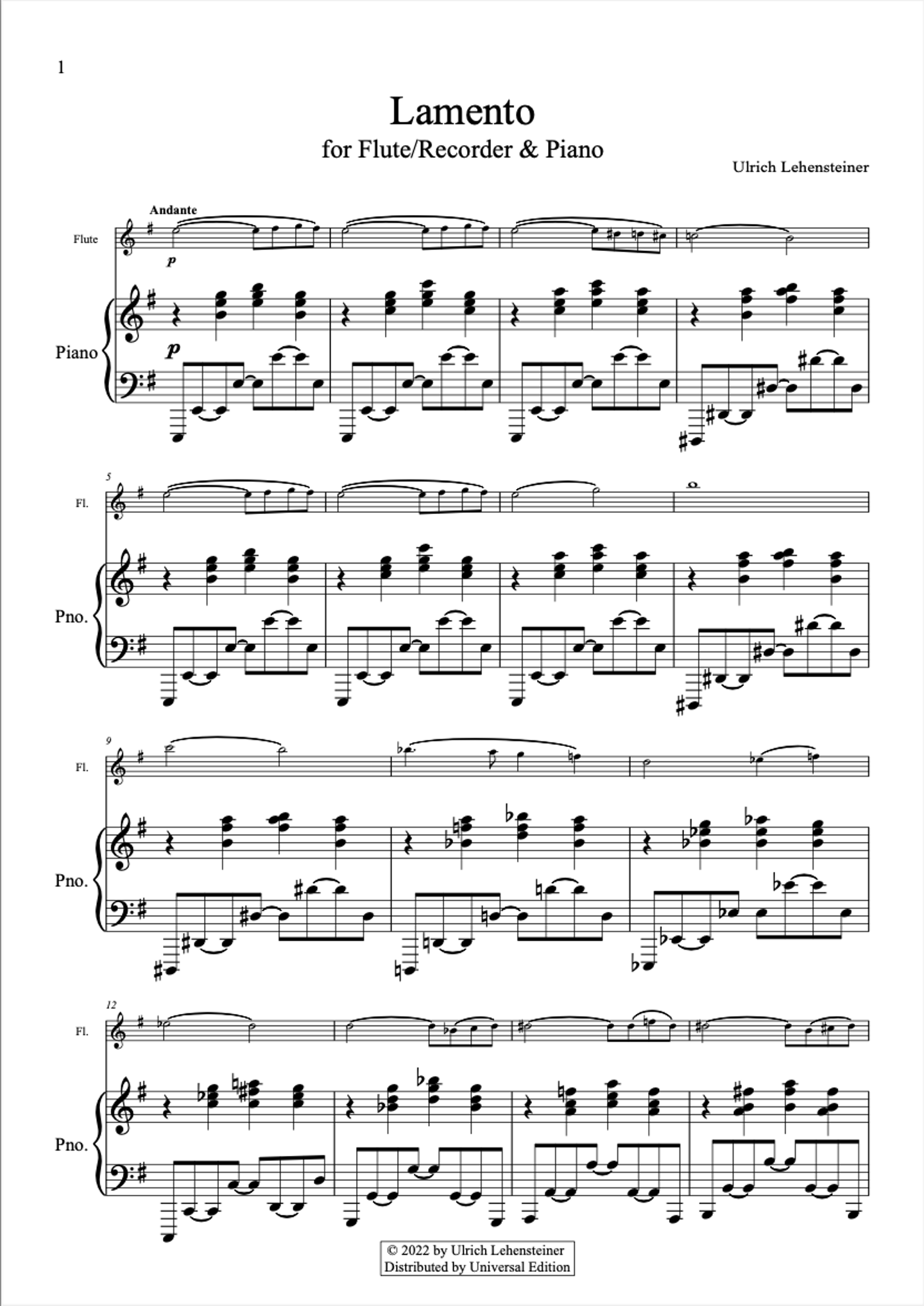
Lamento (Flute & Piano)
a short and easy-to-play, yet emotionally very intense, mournful piece, featuring some unusual, sometimes maybe surprising harmonic changes. The uneasily driving piano-bass-line adds a sense of rhythm to the piece and contrastingly compliments the simple, legato-oriented flute-part.
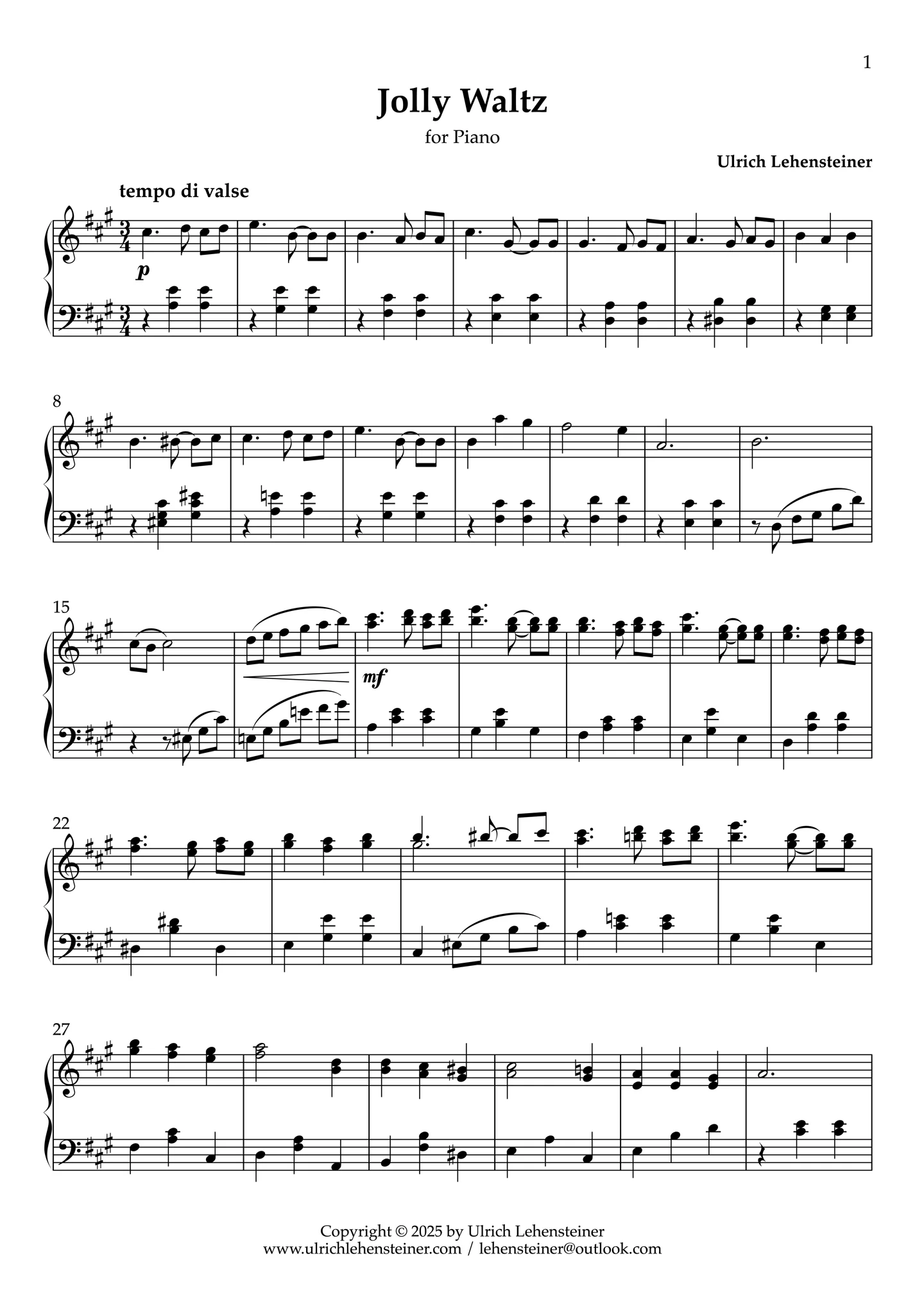
Jolly Waltz (Easy Version)
A rhythmically-driving and upbeat waltz with many unusual syncopations and occasional harmonic shifts. The melody switching between both hands makes for a good exercise in dynamic balance.
Lunar Contemplations
A short piece for piano solo expressing the feeling of looking up into the starry night-sky from your bedroom-window on a quiet evening.
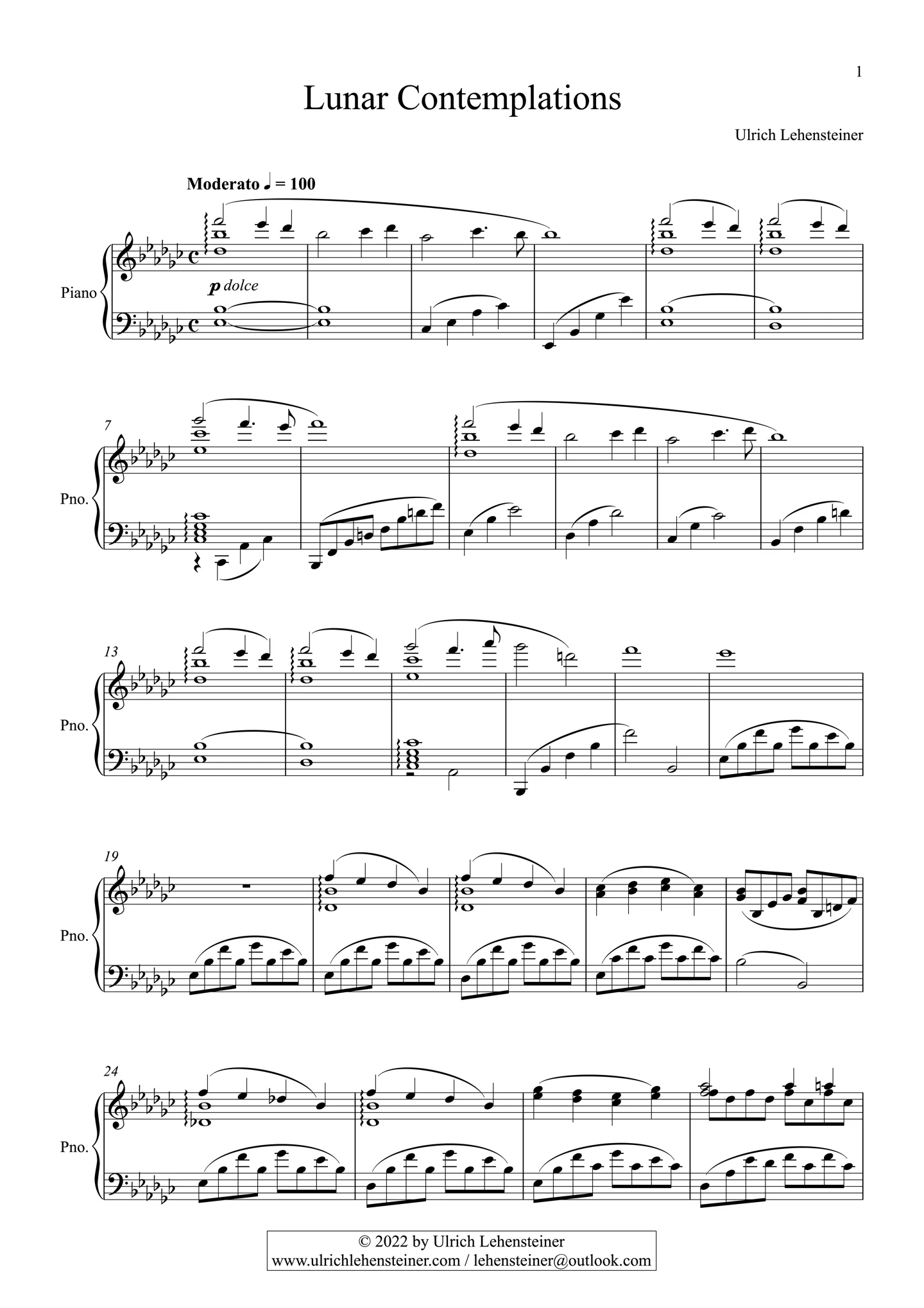
Nouv'amour (Flute & Piano)
"Nouv'amour" is a short piece for flute or recorder capturing the fleeting moment of a first spark of love igniting, featuring easy starting flute- and piano-parts with a short virtuoso middle-section.
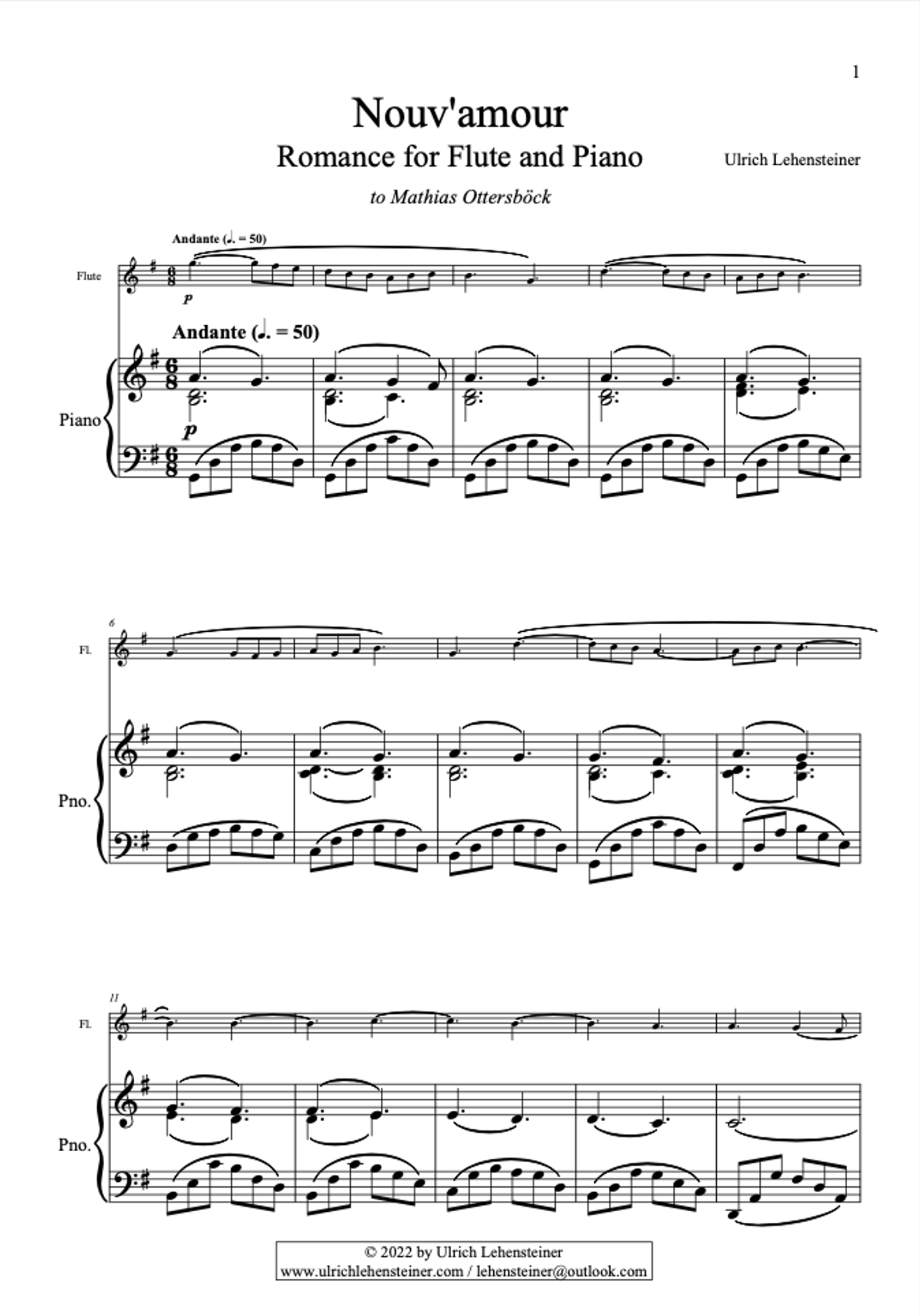
Vampiress' Elegy (from the "Paranormania"-Trio)
An instrumental ballad, that in the verse-like structure of a pop-song depicts the feelings of emptiness of an immortal being lamenting their neverending existence, painting the picture of a pale woman stepping out on the balcony of a derelict castle, looking up into the cold moonlit nightsky.
Featuring a traditional pop-piano-accompaniment, that develops into its own independent voice alongside the melodically oriented Clarinet- and Viola-parts, this "song without words" forms the emotional (and structural) centrepiece of the "Paranormania"-Trio, providing with its emotional depth and heaviness a stark contrast to the other, more lightheartedly spooky scenes of the trio.
Available for the following setups:
Clarinet, Viola & Piano
Violin, Cello & Piano
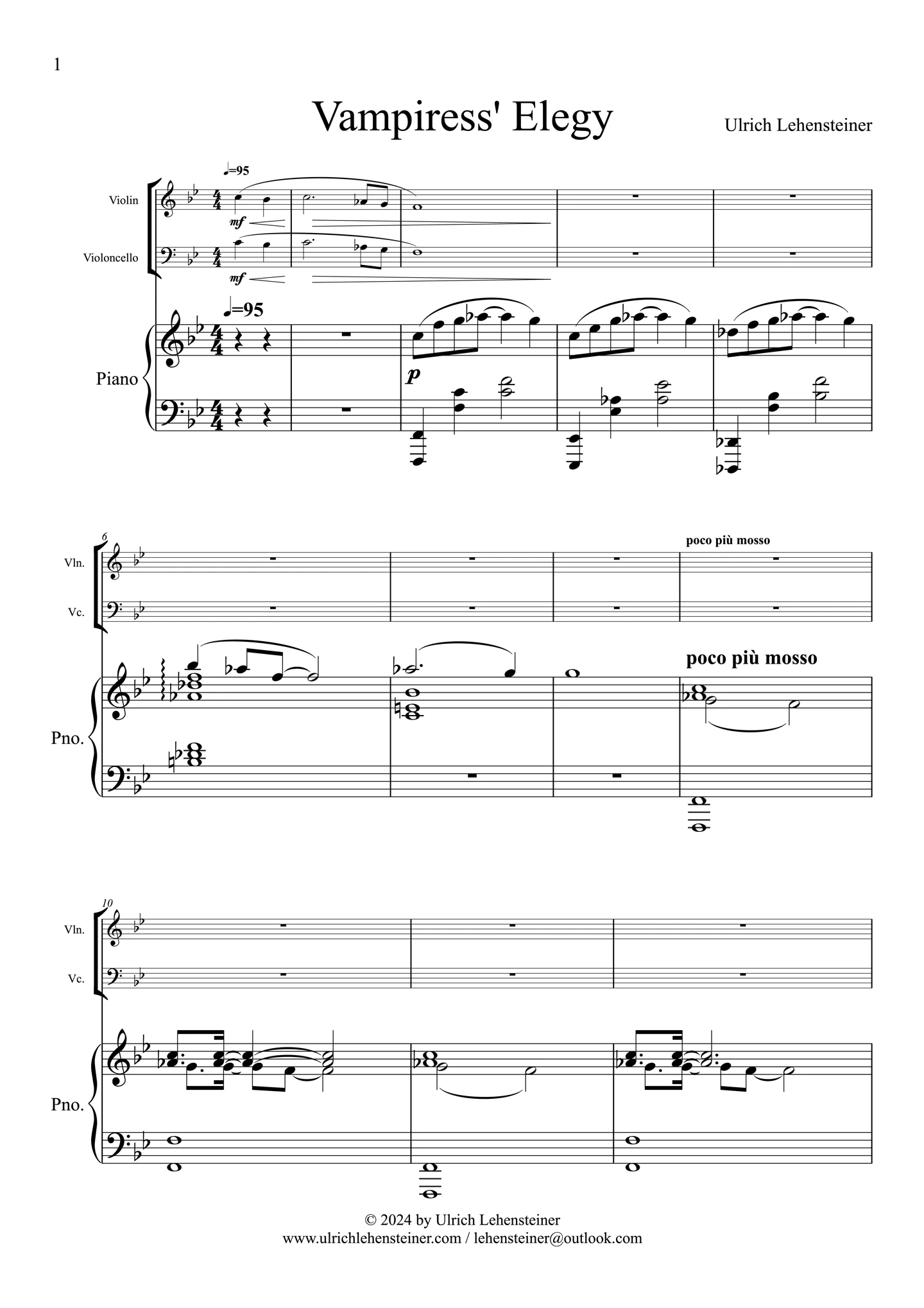
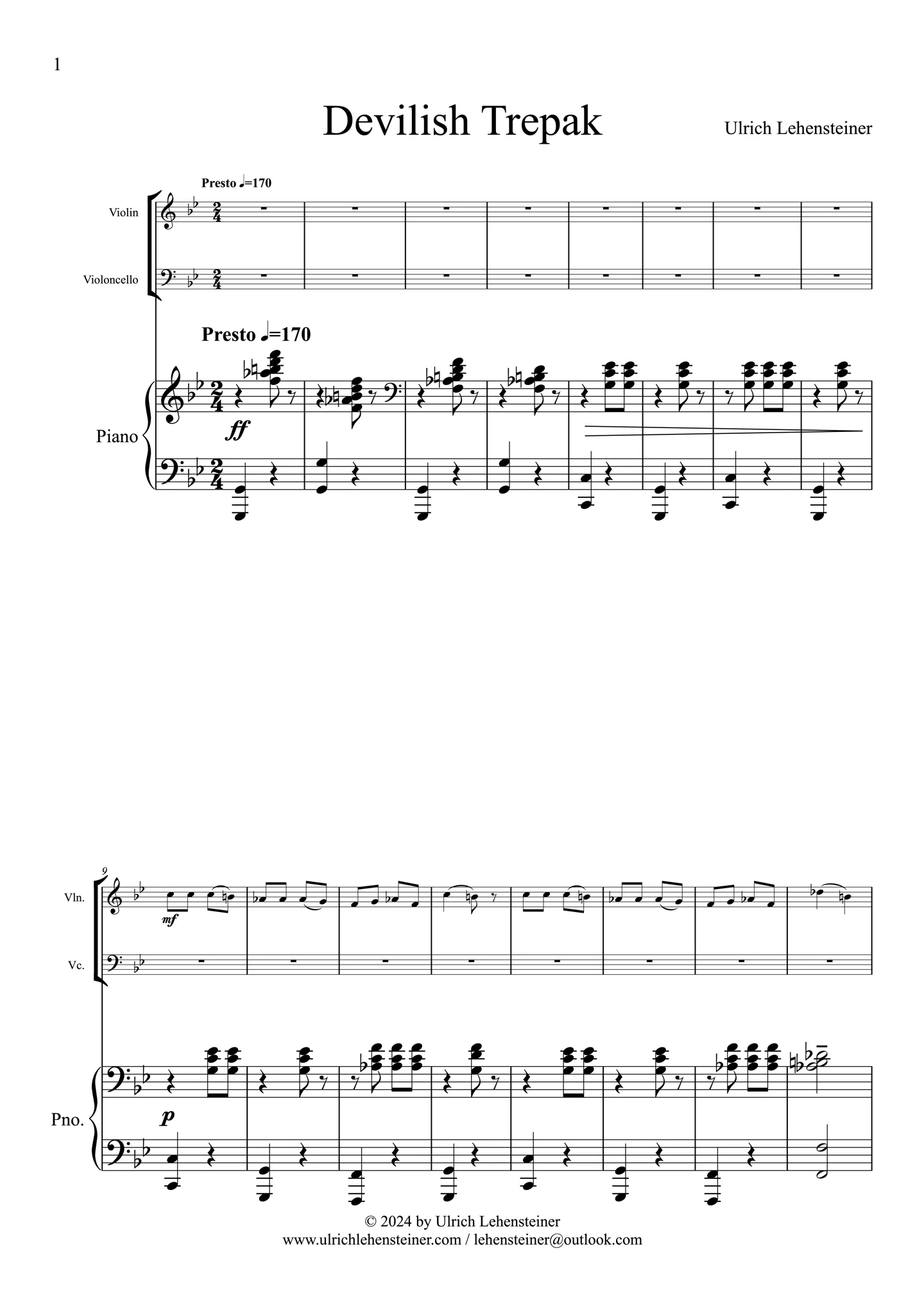
Devilish Trepak (from the "Paranormania"-Trio)
The devil dances Trepak!
A truly devilishly fast-paced piece in the form of a russian folk-dance. Don't be fooled by the moderate opening, because the unpredictably sudden dynamic changes and continiuous increase of drive and tempo make this piece feel like an invitation to dance from the devil himself.
This piece is part of the "Paranormania"-Trio, a collection of five pieces depicting various supernatural, halloween-esque scenes, like visiting a witch's lair, watching ghosts assemble, or summoning demons.
Available for the following setups:
Clarinet, Viola & Piano
Violin, Cello & Piano
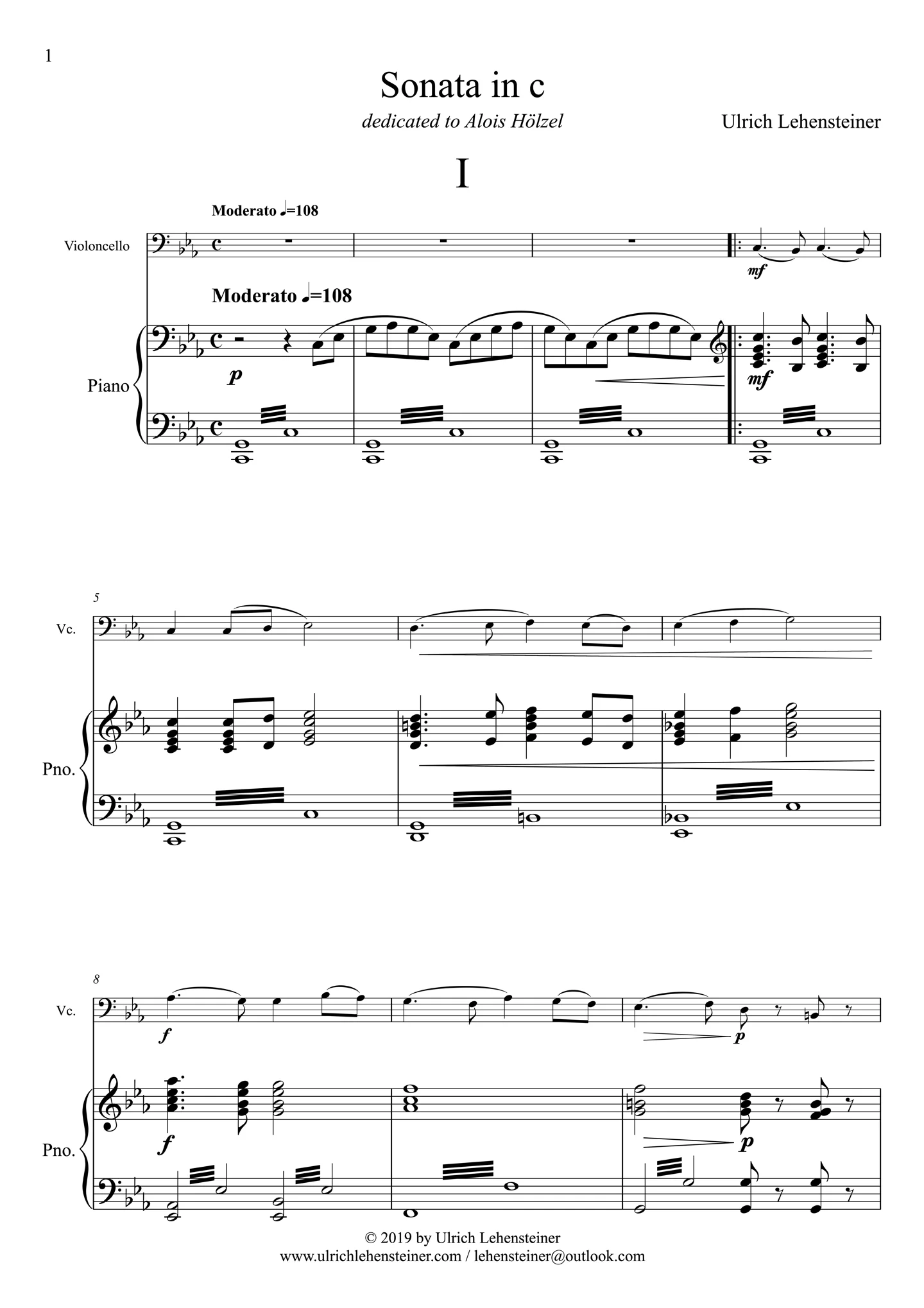
Cello Sonata in c
A classically rooted, overall quite somber sonata, of which the first movement's gloomy mood is contrasted only by its famous middle movement, the "Souvenir of Summer", with its pensive, reminiscing character, melancholic maj7- and maj9-harmonies and focus on its simple but concise melody.
The third movement is, in typical Lehensteiner-fashion, a boisterous waltz that in its variety of rhythms, overabundant energetic drive and also technical demands toys around with the genre's established conception of light dance-music.
The work's dedication is to the composer's late grandfather, who passed away shortly after its completion at the end of summer 2019, making its middle movement not only a "Souvenir of Summer", but also of a person dearly beloved.
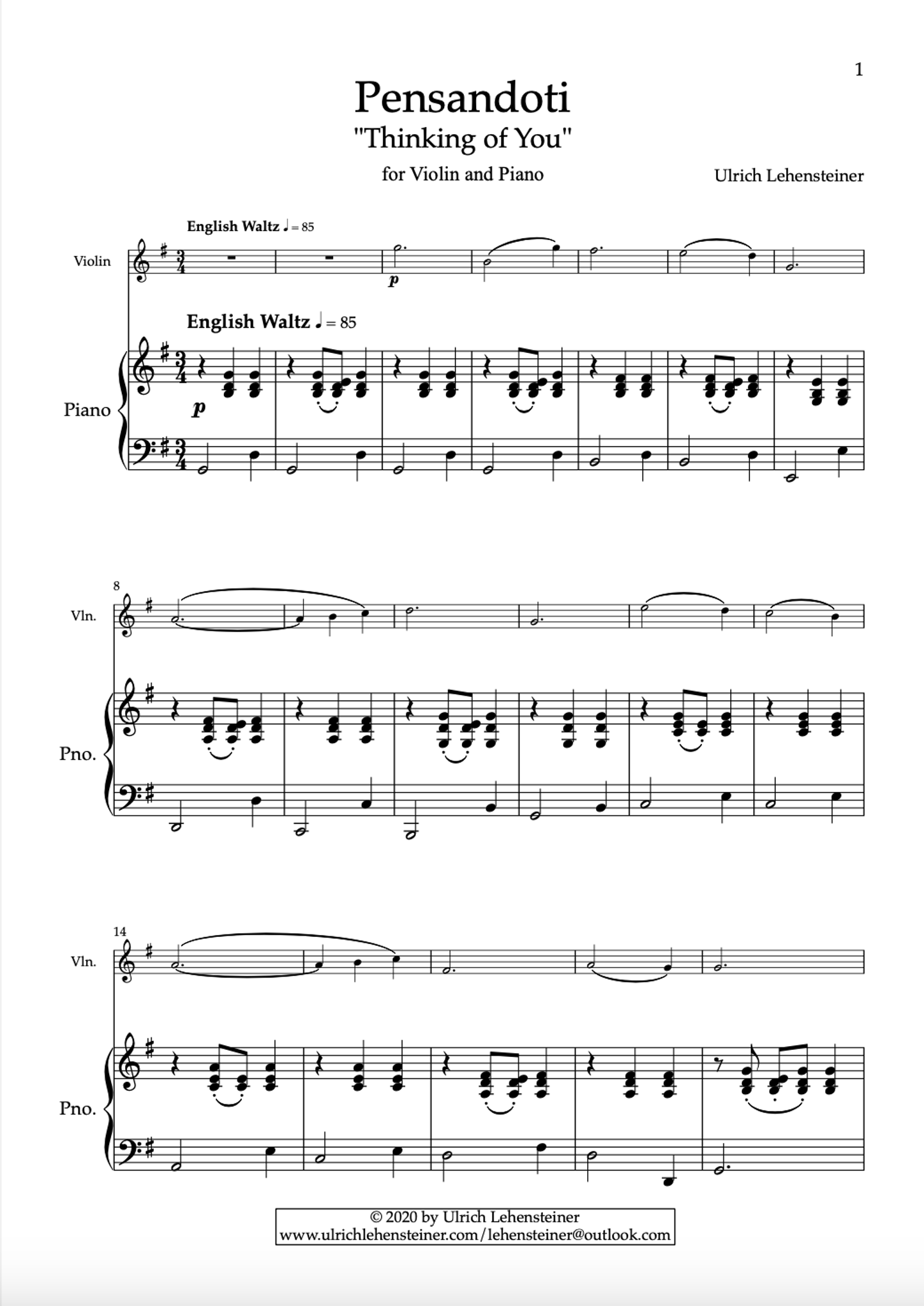
Pensandoti ("Thinking of You") (for violin & piano)
Composed in the first days of Lockdown back in 2020, with the then predominant sense of people longing for their loved ones who they weren't allowed to see during that time, the "Pensandoti" depicts the nostalgic longing for a beloved person who is not around, when the only thing one can do about is solely thinking about them.
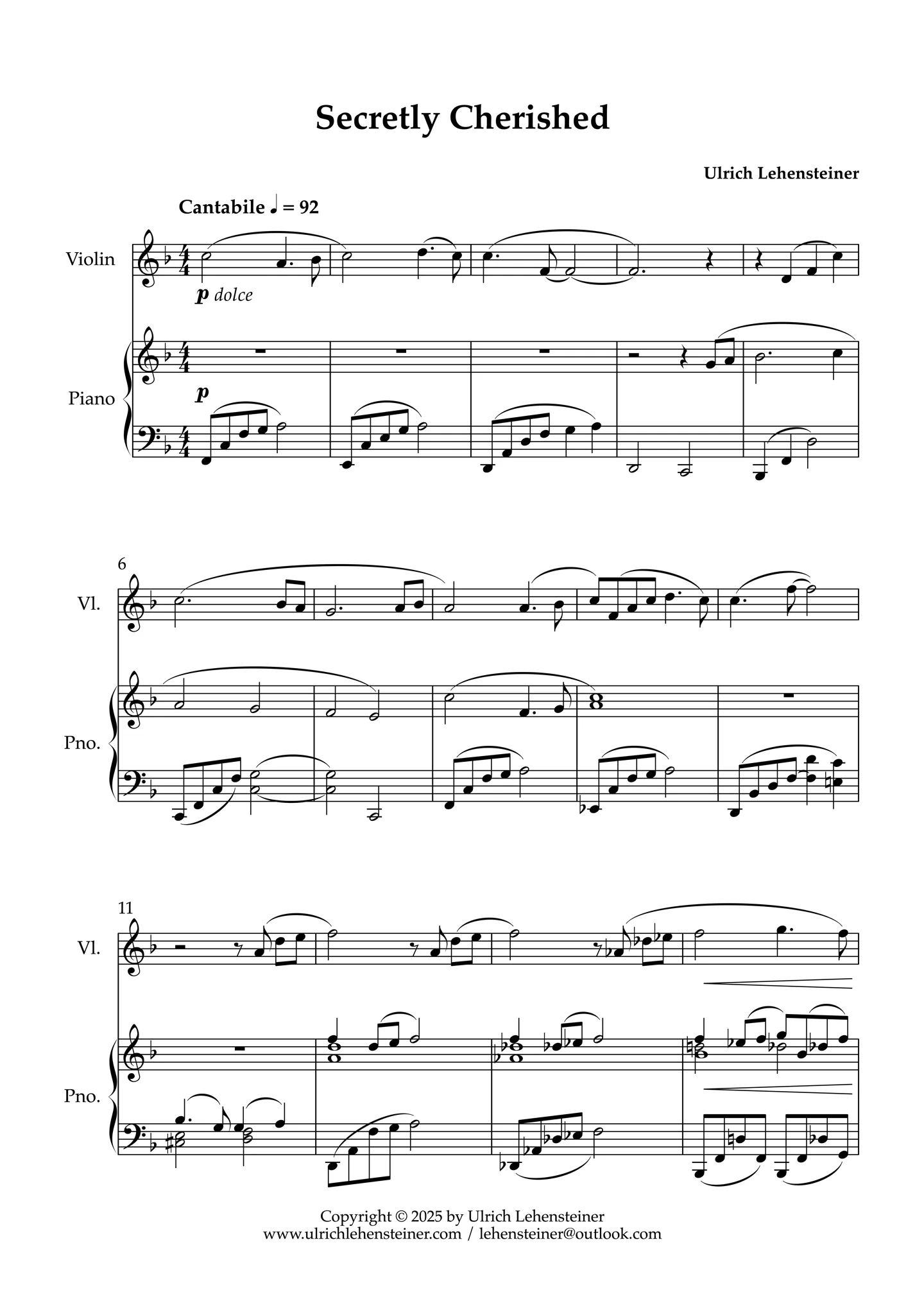
Secretly Cherished (Violin & Piano)
A delightfully simple and tuneful piece with an easy violin-part, ideal for beginners on the instrument.
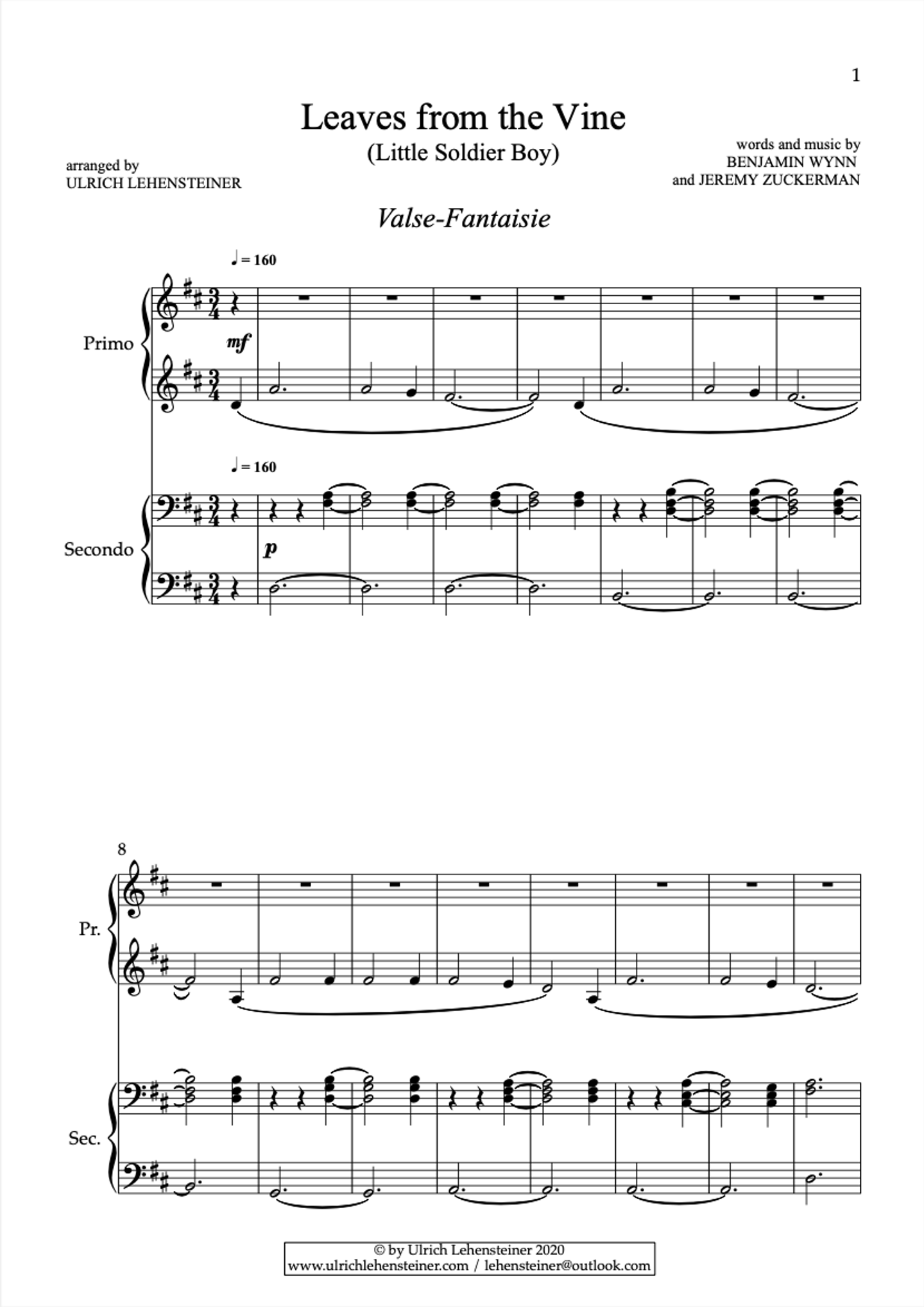
Leaves From The Vine/Little Soldier Boy
A waltz-like Fantasy for piano four-hands, based on the popular tune "Leaves from the Vine" from the Nickelodeon-show "The Last Airbender". Featuring an easy-to-play, melody-driven Primo-part with occasional wide-range-arpeggios, and an accompanying Secondo that sometimes takes over the main melody.
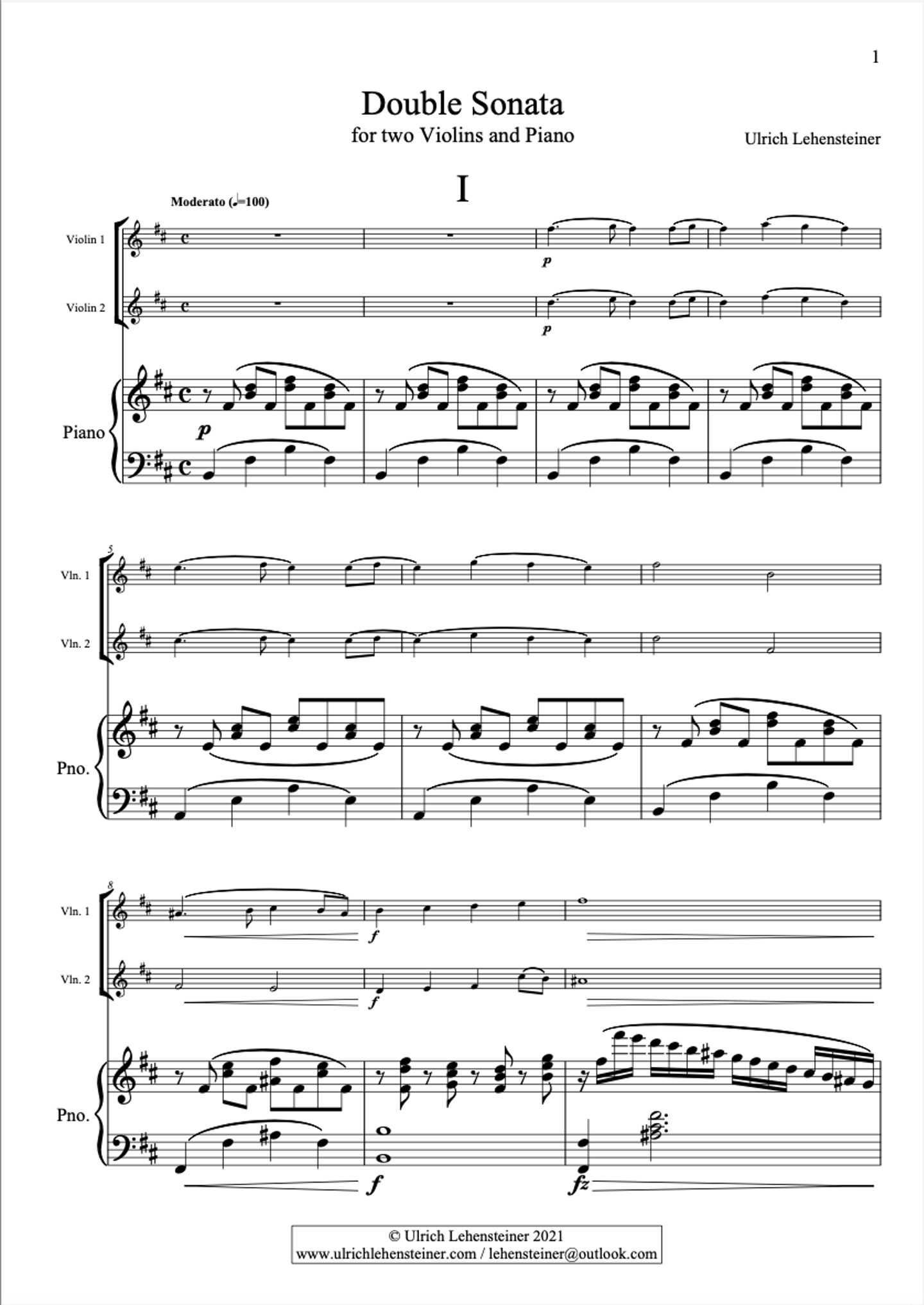
Double Sonata (for 2 Violins & Piano
The "Double"-Sonata is a trio-setup-piece all about duality and contrast. Led by not just one violin but two, the roles of leading voice and accompaniment constantly switch between the three instruments.
All three movements feature two strongly contrasting themes and each of the three approaches the themes' development in a unique way.
The first movement's tension resolves in a kind of "anti-climax", a moment of greatest fragility after the built-up tension, which then returns to a (almost) note-perfect reprise of the exposition, to show that in the end nothing has changed.
The second movement even intensifies the struggle between the two themes, with ultimately one of them taking over.
In the third movement, an energetic waltz, no effort is even made to unify it's two themes, they just stand block-like against each other.
Witch's Lair (from the "Paranormania"-Trio)
A musical walk through the gloomy caves of a witch's hideout, featuring some odd harmonic twists and occasional dramatic outbursts that lead into a wicked dance-like reprise of the main theme at the end.
This piece serves as the opening of the "Paranormania"-Trio, a collection of five pieces depicting various supernatural, halloween-esque scenes, like dancing with the devil or summoning demons.
Available for the following setups:
Clarinet, Viola & Piano
Violin, Cello & Piano
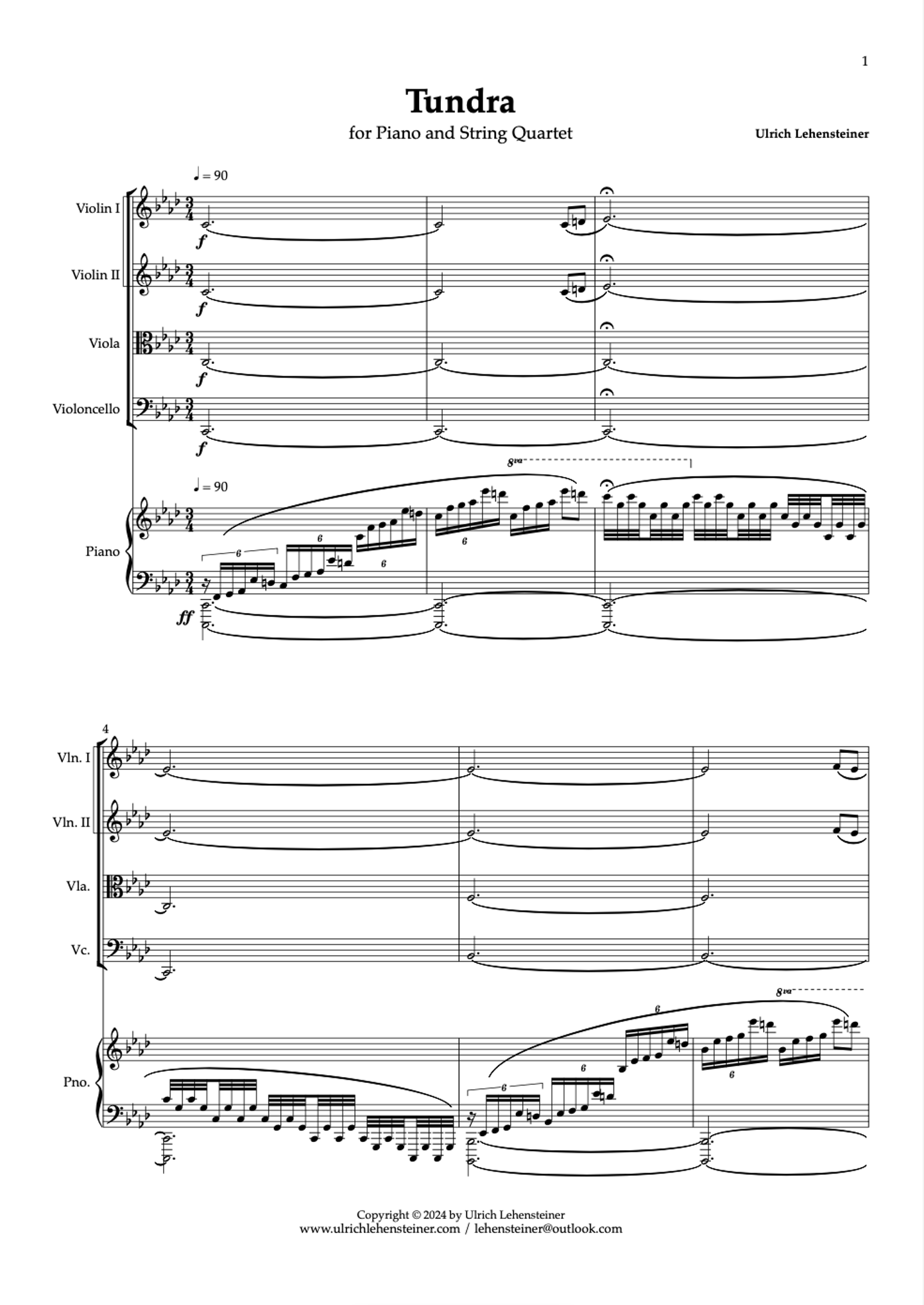
Tundra (Chamber Music Version)
"Tundra" is a miniature piano concerto with reduced orchestra-setup (strings only) in one continuous movement. Programmatically depicting a lone wanderer's walk through an icy wasteland by switching between description of the scene's hostile environment and introspection of the wanderer's inner wasteland of emotions, the piece features brilliantly virtuosic piano-passages and strong multi-layered rhythms.
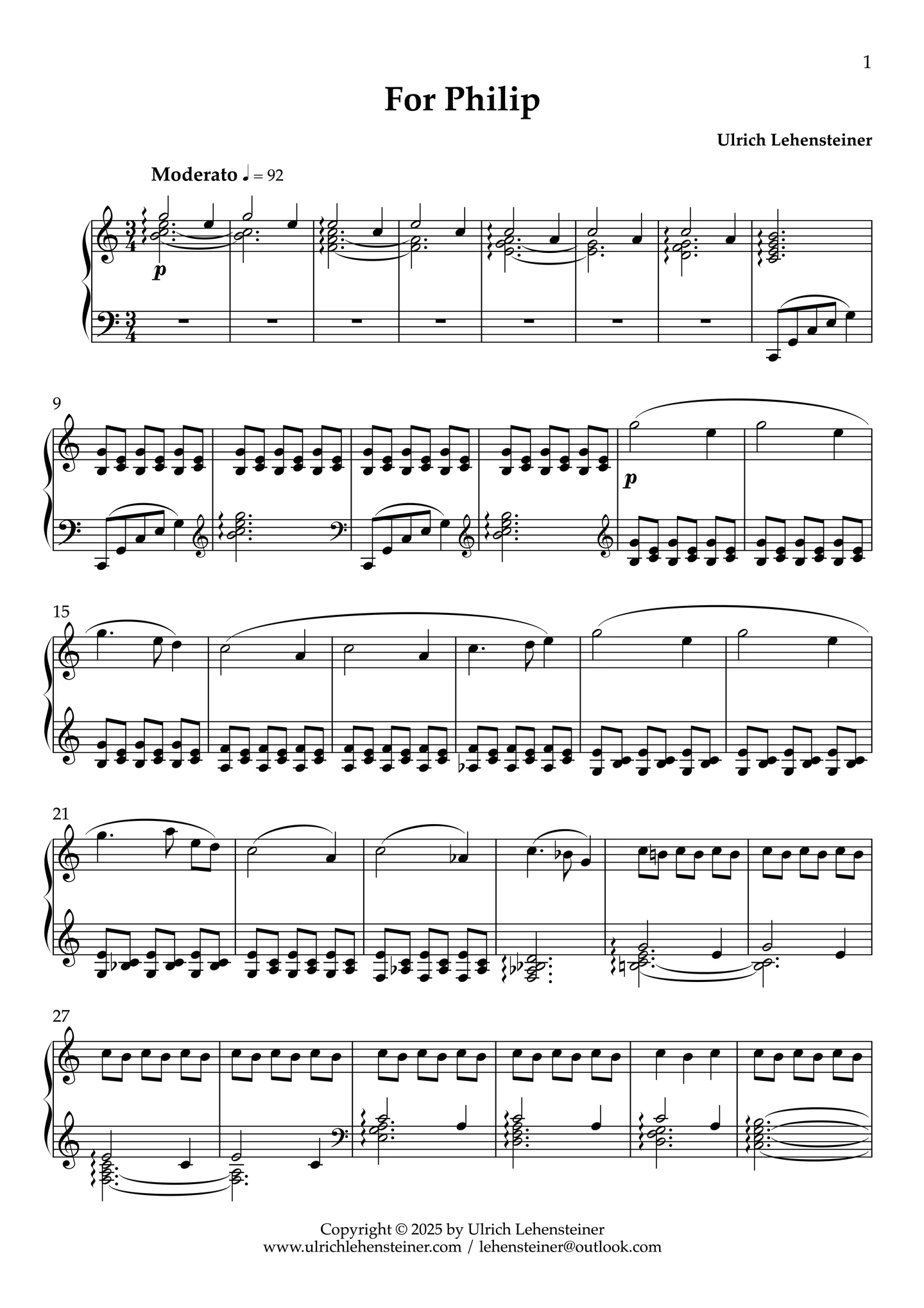
For Philip
An atmospheric four-part piano-fantasy that from its slow opening continuously builds up to an energetic climax, before returning to the previous serenity.
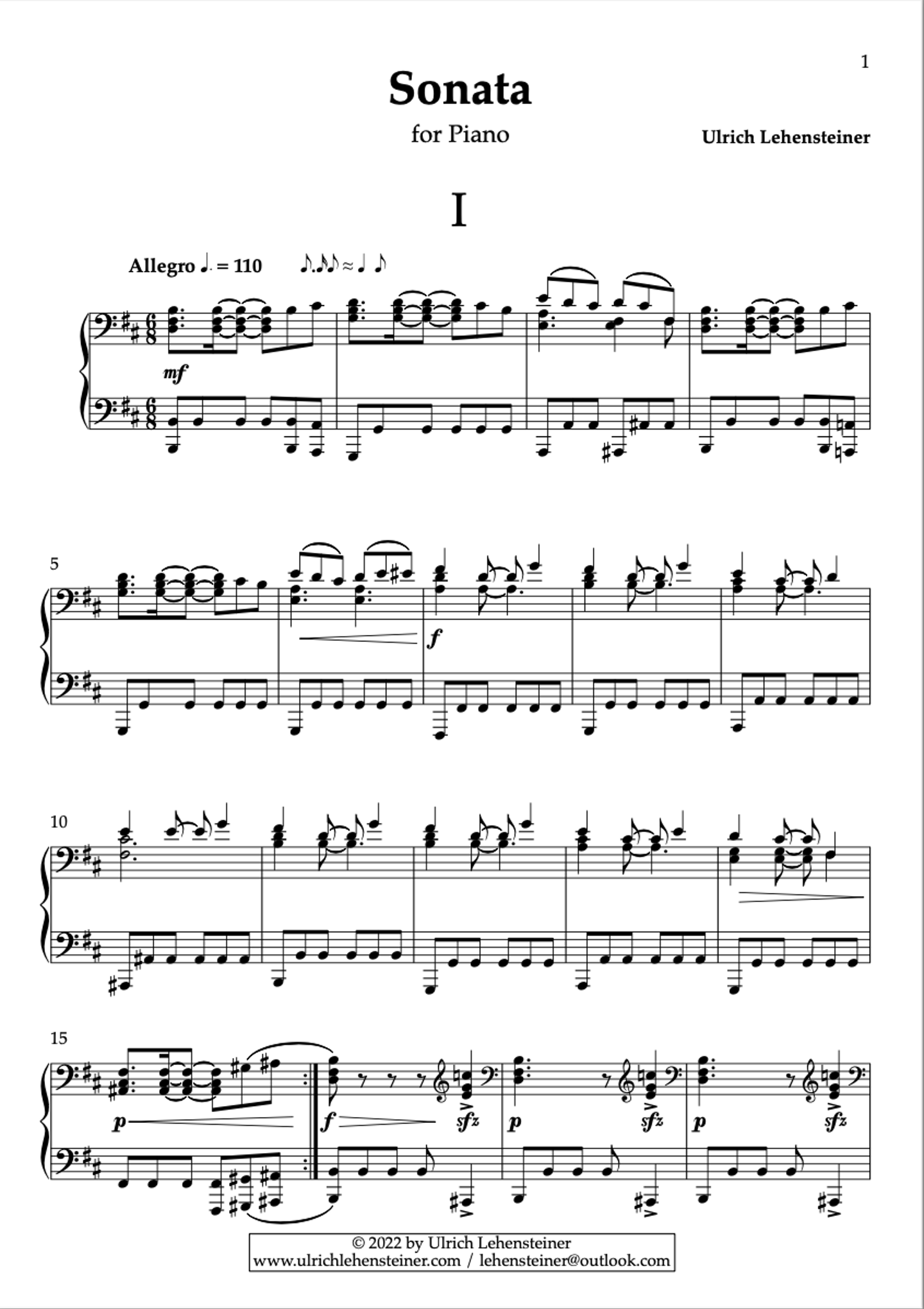
Piano Sonata in b-minor
A classic three-movement piano-sonata with a modern twist, featuring a high-energy first movement with a main theme inspired by the Netflix-series "The Witcher" that in classic sonata-form is contrasted by a major-key secondary theme, a serene second movement torn between two radically differently textured themes, and a boisterous waltz-finale that starts off very tame but gradually gets more and more exciting and virtuosic.
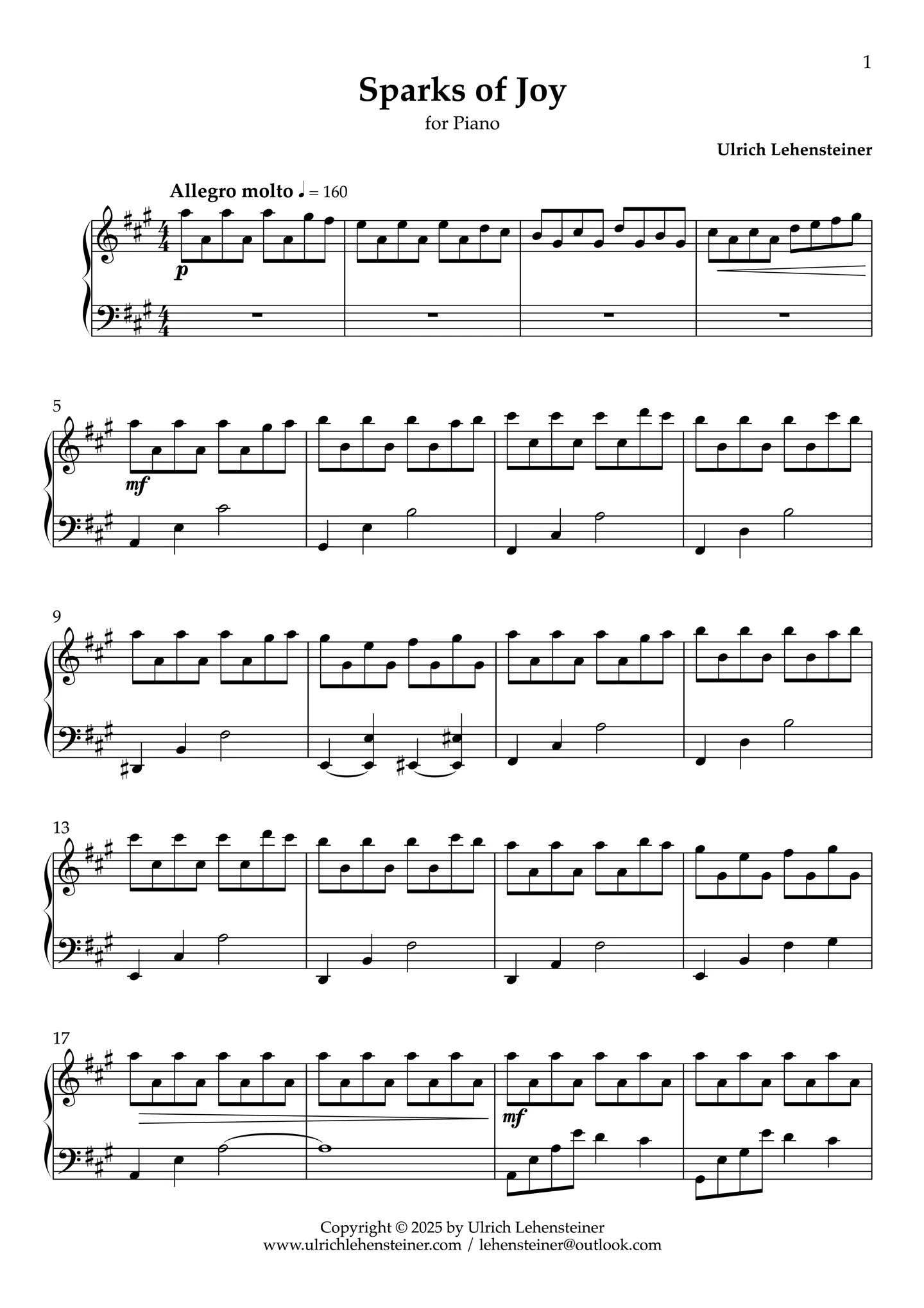
Sparks of Joy
A face-paced, upbeat etude in bariolage-technique, that climaxes into a concerto-like cadenza.
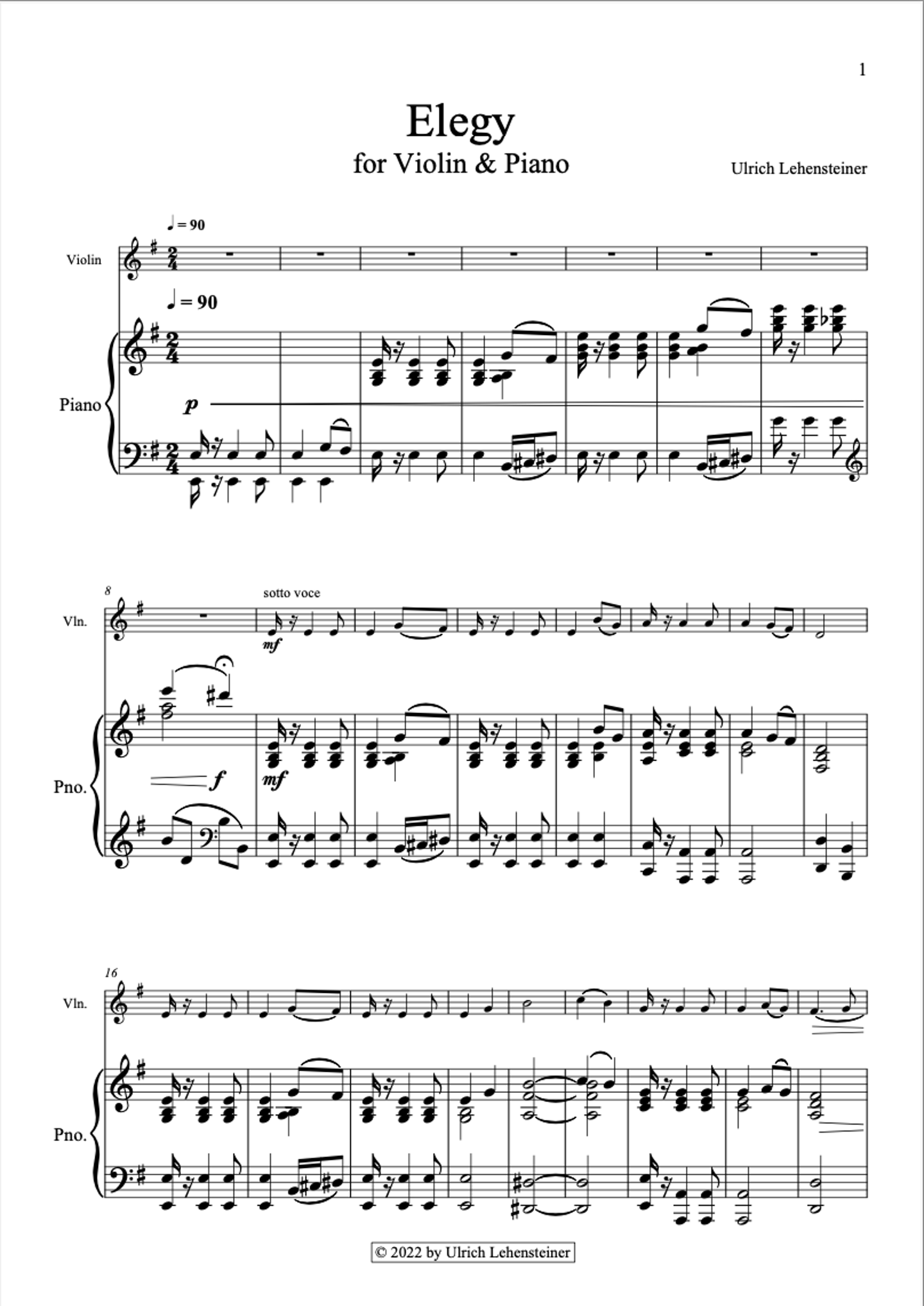
Energetic Elegy (Violin & Piano)
A rather unusual Elegy with forcefully driving rhythms, showing that lamentation does not always have to mean quiet mourning but also anger and discontent.
Eight Melodies
A melodious collection of short, intermediate piano pieces that express a broad range of different emotions and moods.
- 1. Lunar Contemplations
- 2. Sweet Delusions
- 3. Yellow Waltz
- 4. For Philip
- 5. Scent of Solitude
- 6. Jolly Waltz
- 7. Unnamed Longing
- 8. Sparks of Joy
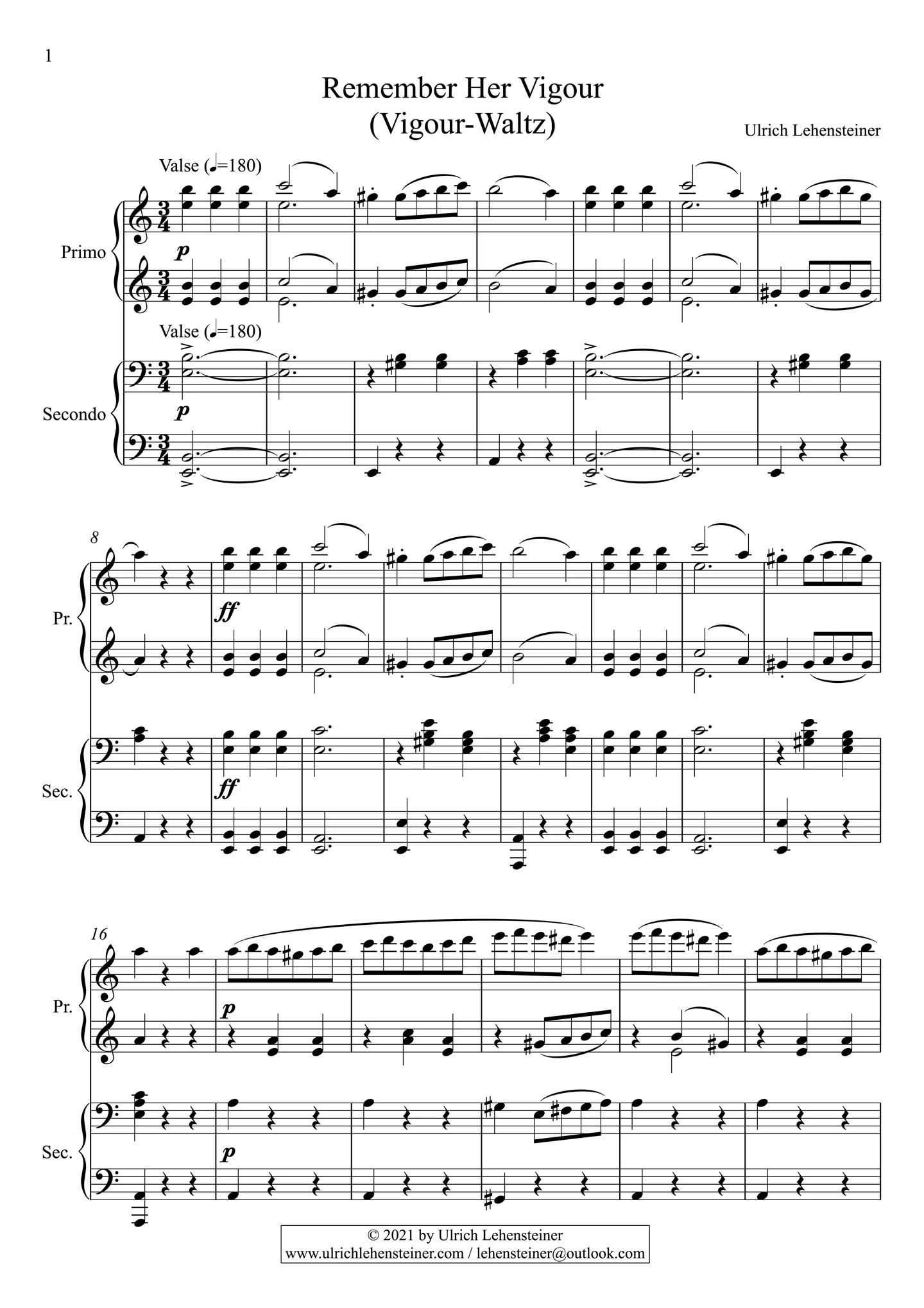
Remember-Waltzes (Piano Four-Hands)
The Remember-Waltzes are a collection of seven waltz-like pieces for piano four hands, depicting the memories of various relatable scenes of a person's everyday-life, like the fervour of a determined loved one, the sereneness of a warm summer-day or the emotional rush of an ecstatic experience. Memories some would like to experience, some might actually have experienced.
-
Remember Her Vigour
-
Remember Those Late Summer Days
-
Remember Your Mind In Turmoil
-
Rosa
-
Remember The Ecstasy
-
Remember Oblivion
-
Remember What Is Lost
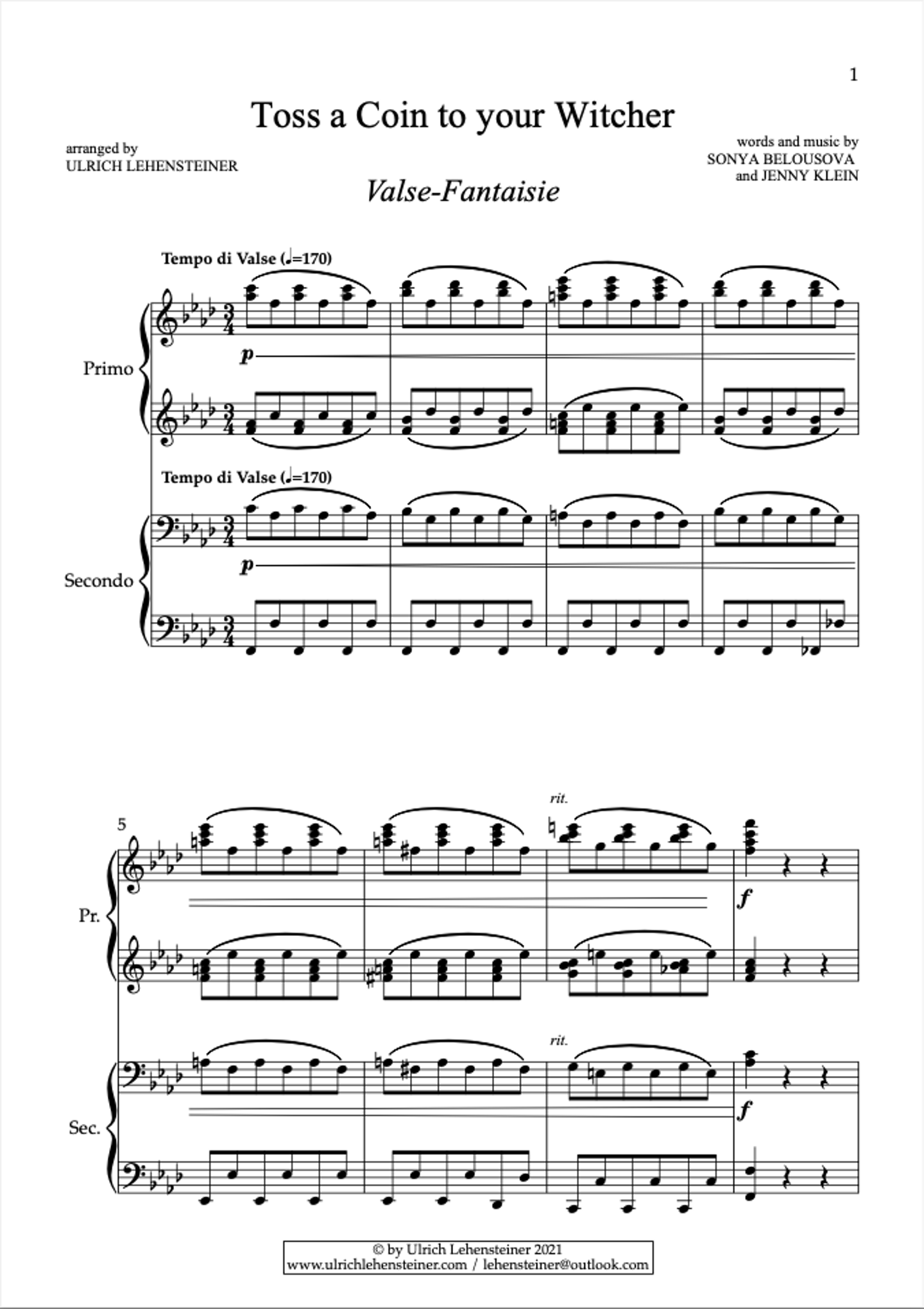
Toss A Coin To Your Witcher (piano four-hands)
A waltz-like Fantasy for piano four-hands, based on the popular tune "Toss A Coin To Your Witcher" from the Netflix-show "The Witcher".
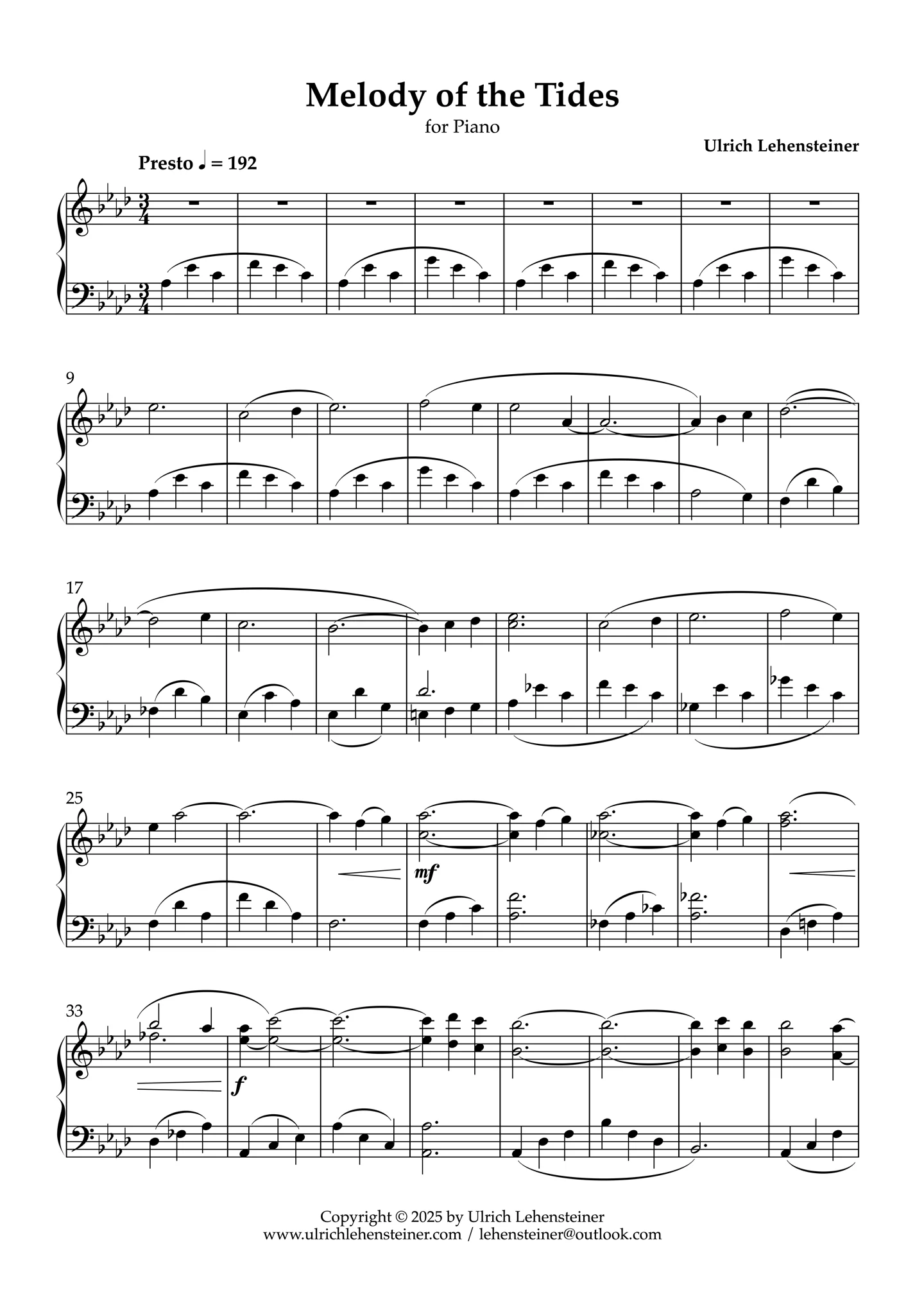
Melody of the Tides (easy version)
Ein sanft fließendes Stück, dessen kontinuierlich auf- und absteigende Melodie und Begleitung an Gezeitenwellen erinnern, die sich an der Küste brechen.
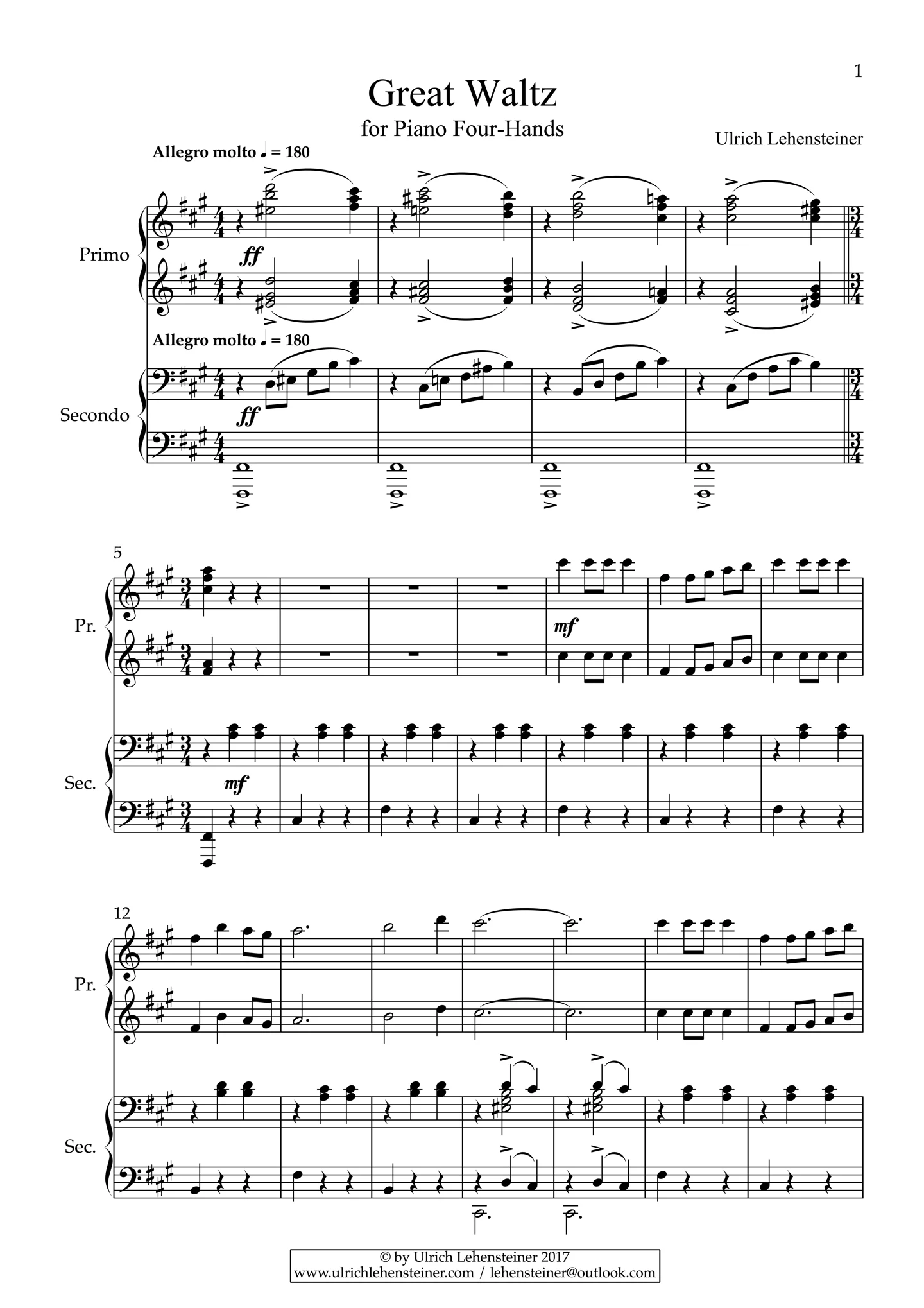
Great Waltz
A high-energy-waltz, featuring boisterous syncopated rhythms that challenge the traditional perception of waltzes being light and shallow easy-listenings.
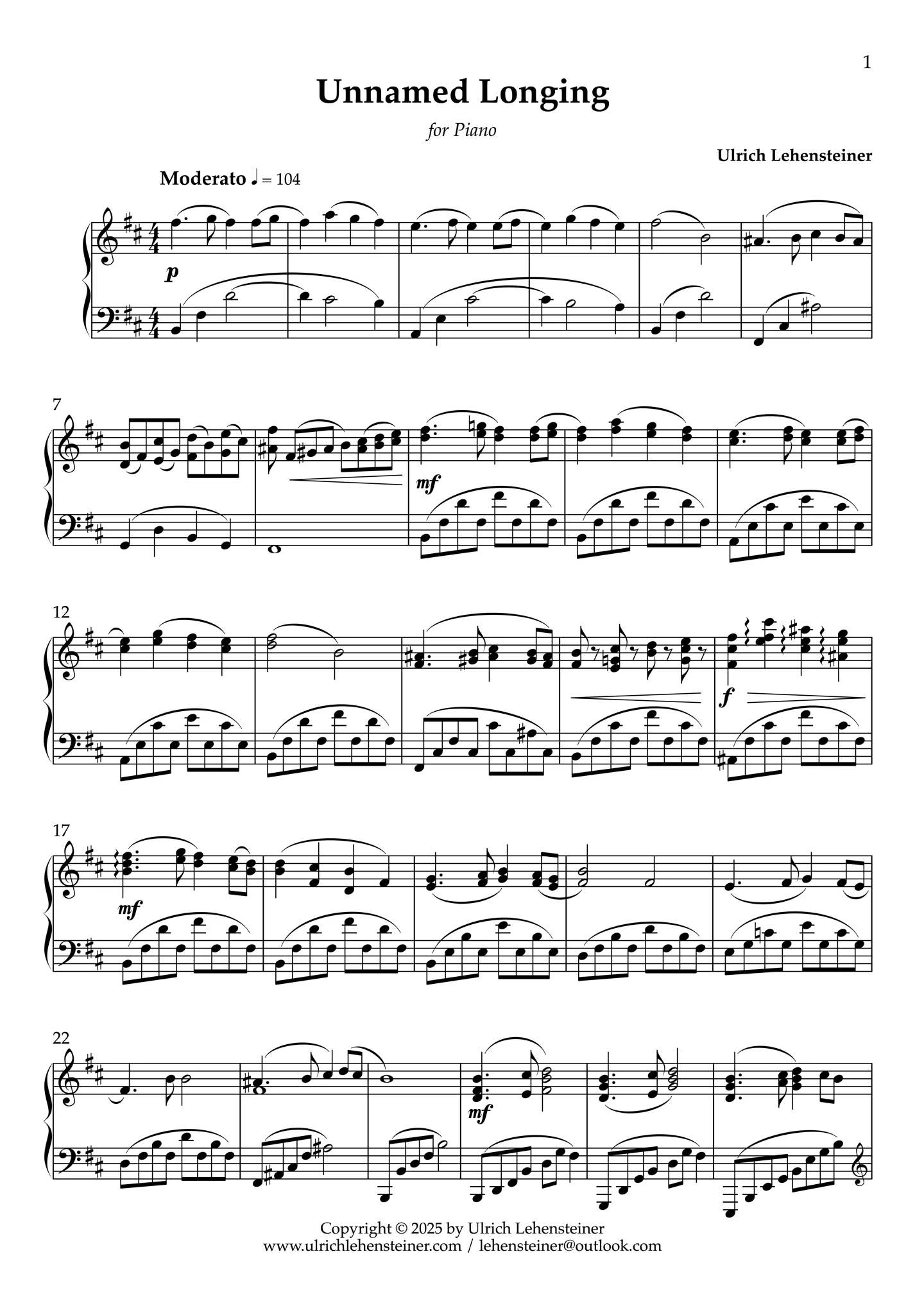
Unnamed Longing
A highly melancholiac piano-piece that, almost like a set of variations, goes through different iterations of the same melodic theme, ending on an inconclusive note.
Orchestermusik
Tundra
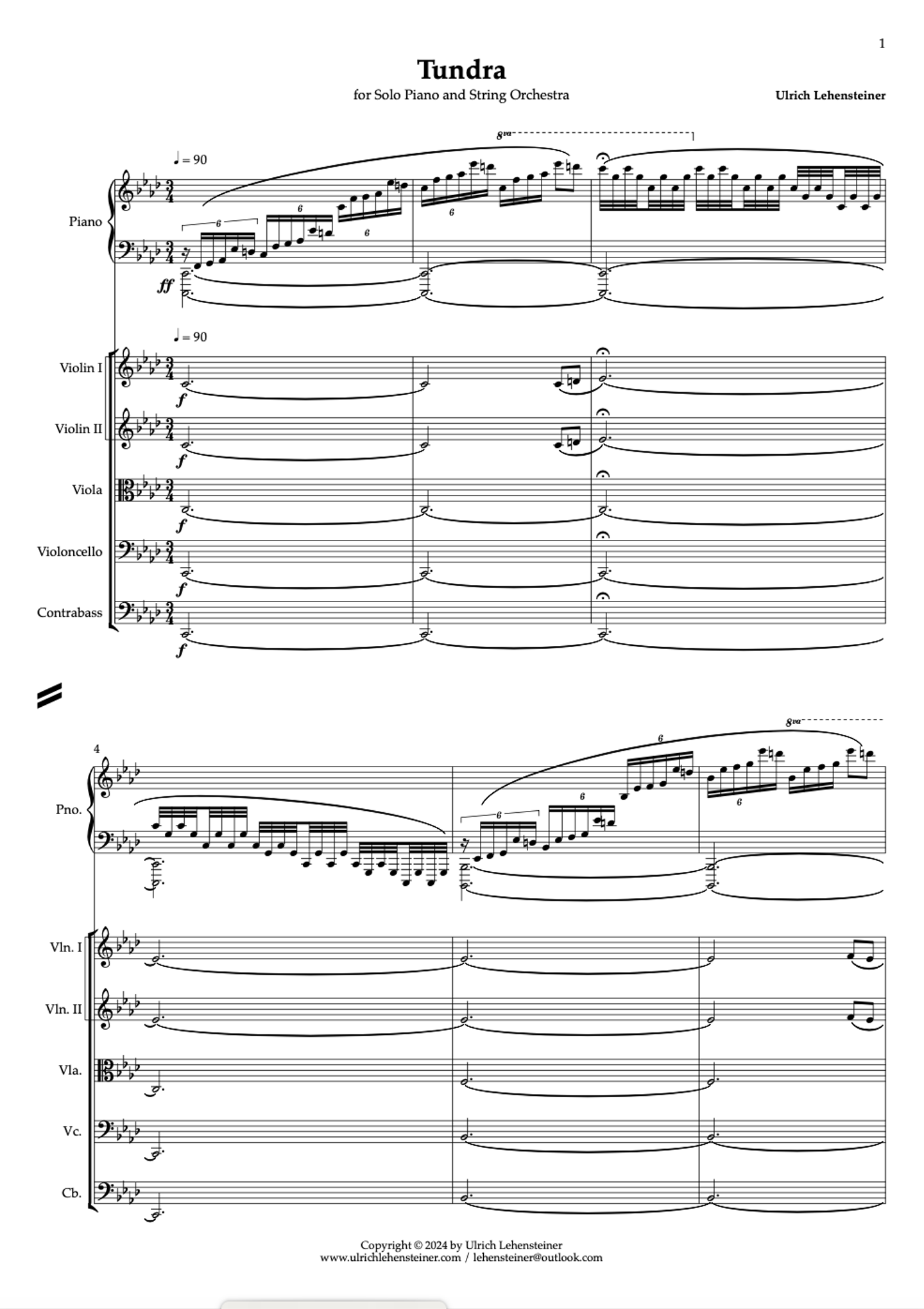
"Tundra" is a miniature piano concerto with reduced orchestra-setup (strings only) in one continuous movement. Programmatically depicting a lone wanderer's walk through an icy wasteland by switching between description of the scene's hostile environment and introspection of the wanderer's inner wasteland of emotions, the piece features brilliantly virtuosic piano-passages and strong multi-layered rhythms.
Kirchenmusik
Intimate Mass (Mezzosoprano & Organ)
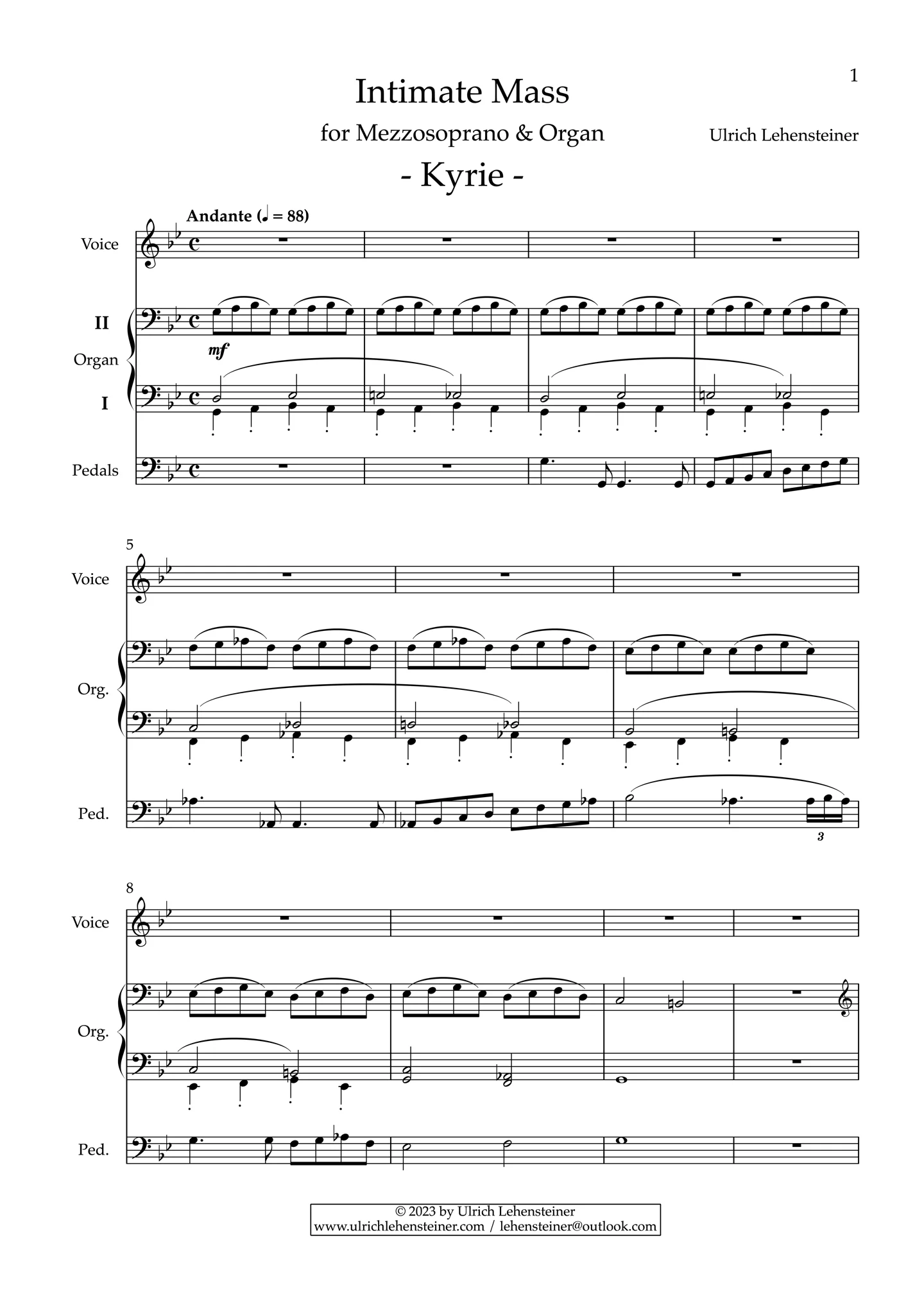
The "Intimate Mass" offers a traditional mass setting on a formally very reduced scope; scored for solo voice and organ, it depicts a person's inner journey from spiritual uncertainty and doubt to confidence across its five parts (while retaining the original latin-mass-text), combining traditional dramatic settings with more upbeat, pop-like elements, such as the final part, the Agnus Dei.
Both in its reduced setup as well as in its emotional subjectiveness a very "Intimate Mass".
Also available for Baritone & Organ.
PANDAIMONIKON
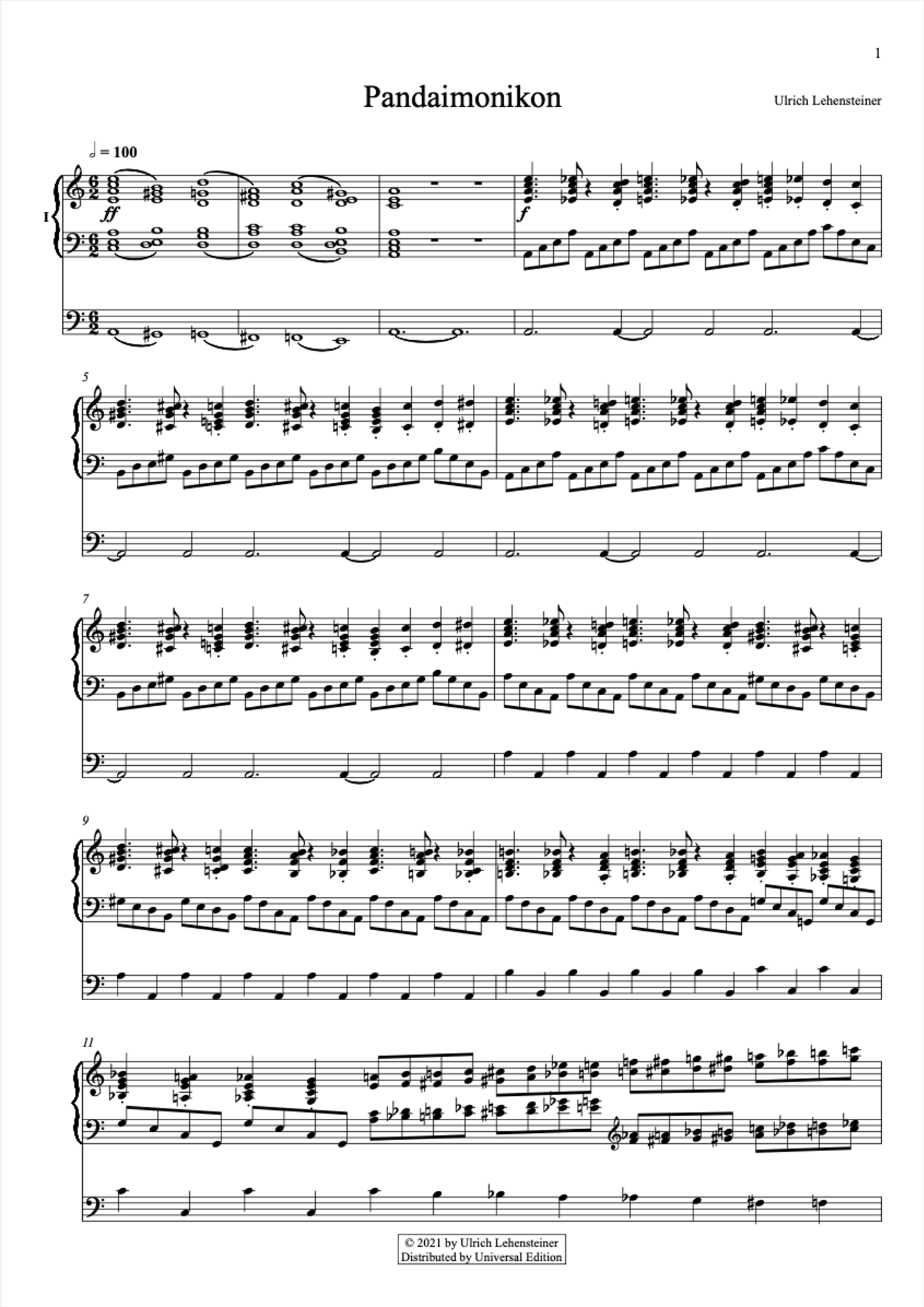
The "PANDAIMONIKON" (greek portmanteau: "pan", "daimon" and suffix "-ikon") is a musical depiction of a mystical encyclopedia containing the entirety of demons from all known world-mythologies, both their descriptions as well as the demons themselves. The opening chords depict the seals of the book breaking, before the demonic power is unleashed.
Intimate Mass (Baritone & Organ)
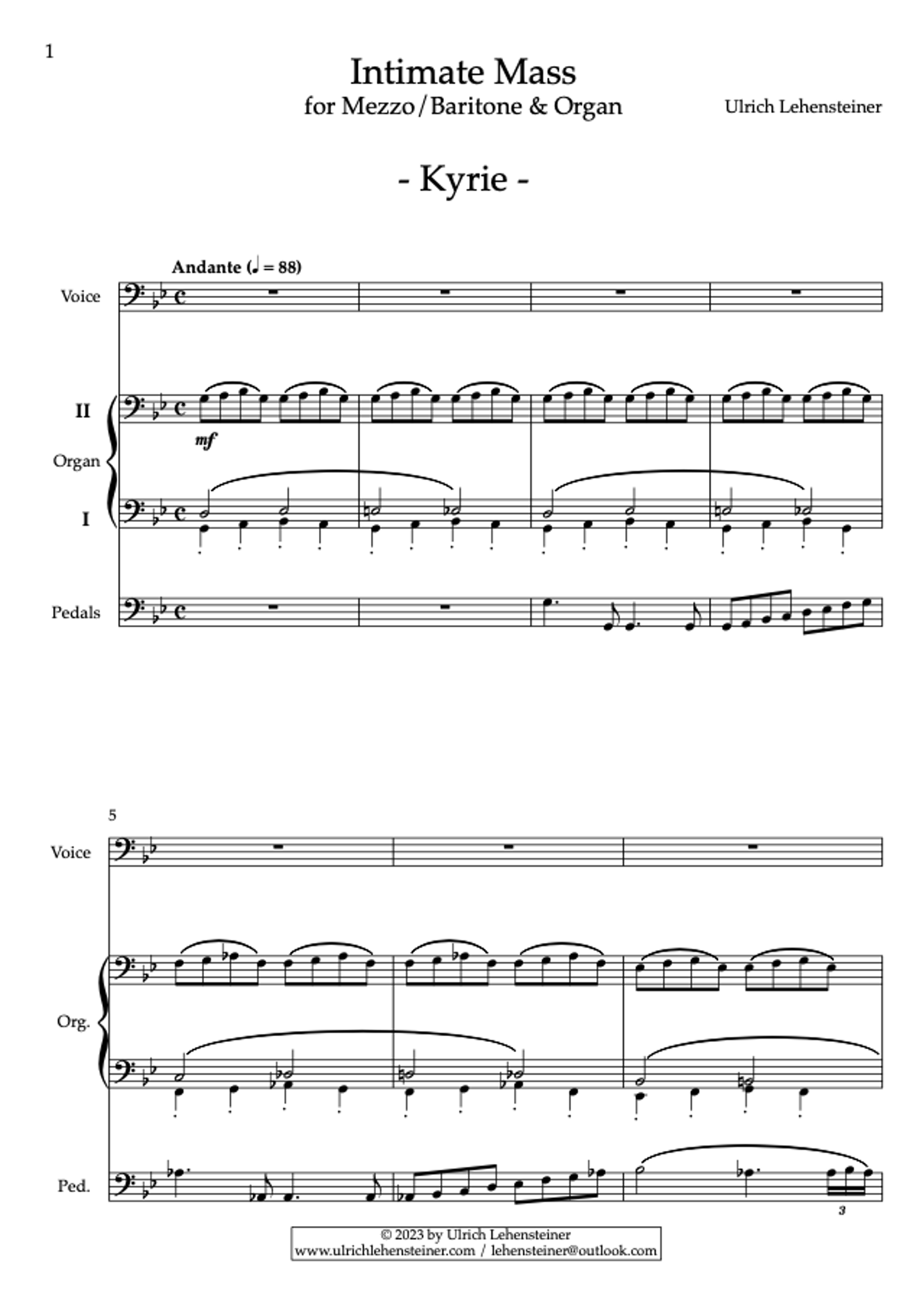
The "Intimate Mass" offers a traditional mass setting on a formally very reduced scope; scored for solo voice and organ, it depicts a person's inner journey from spiritual uncertainty and doubt to confidence across its five parts (while retaining the original latin-mass-text), combining traditional dramatic settings with more upbeat, pop-like elements, such as the final part, the Agnus Dei.
Both in its reduced setup as well as in its emotional subjectiveness a very "Intimate Mass".
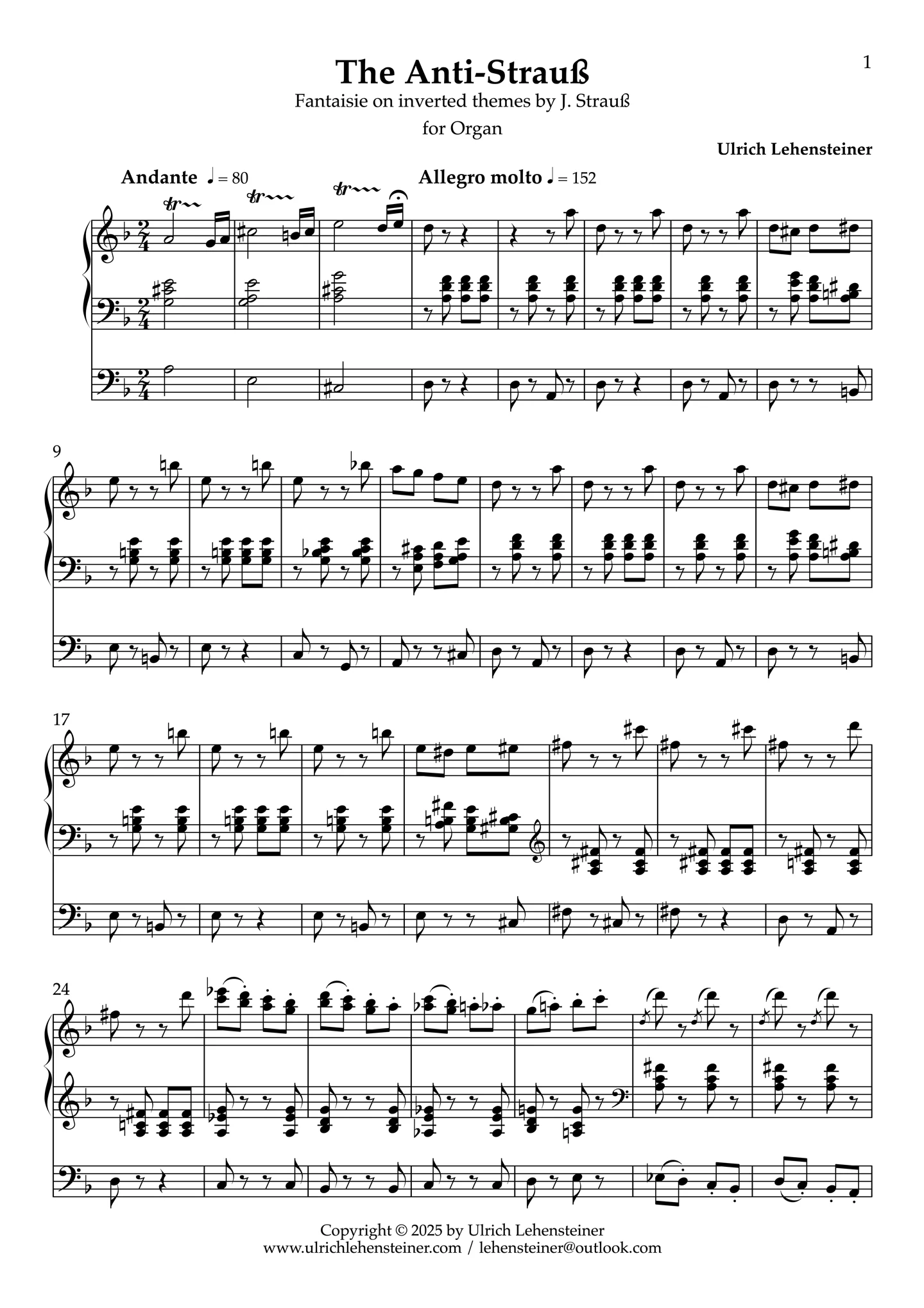
The Anti-Strauß
"The Anti-Strauß" is probably the most unconventional hommage to Johann Strauß ever written, in honour of his 200th birthday.
This piece takes two of his most popular melodies, the "Tritsch-Tratsch-Polka" in the first part, and "The Beautiful Danube" in the second, and literally turns them upside down and shifts them to minor. The result is a staggering four-minute piece for organ (an instrument famously neglected by Strauß) that brings the music of Strauß not only onto a new instrument, but also a new musical era.
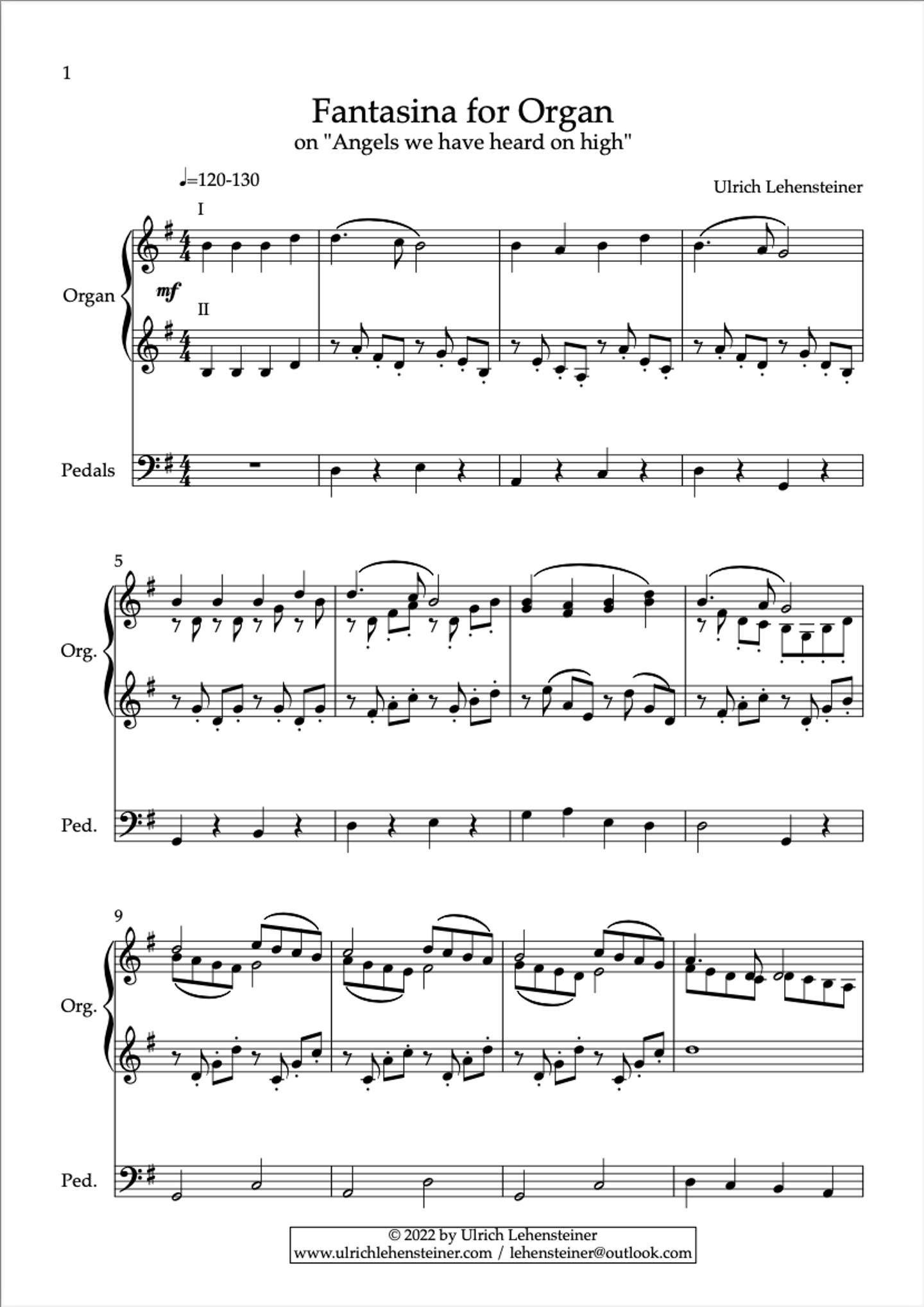
Angels We Have Heard On High - Fantasina for Organ
A short fantasy for organ based on the popular Christmas carol "Angels We Have Heard On High".
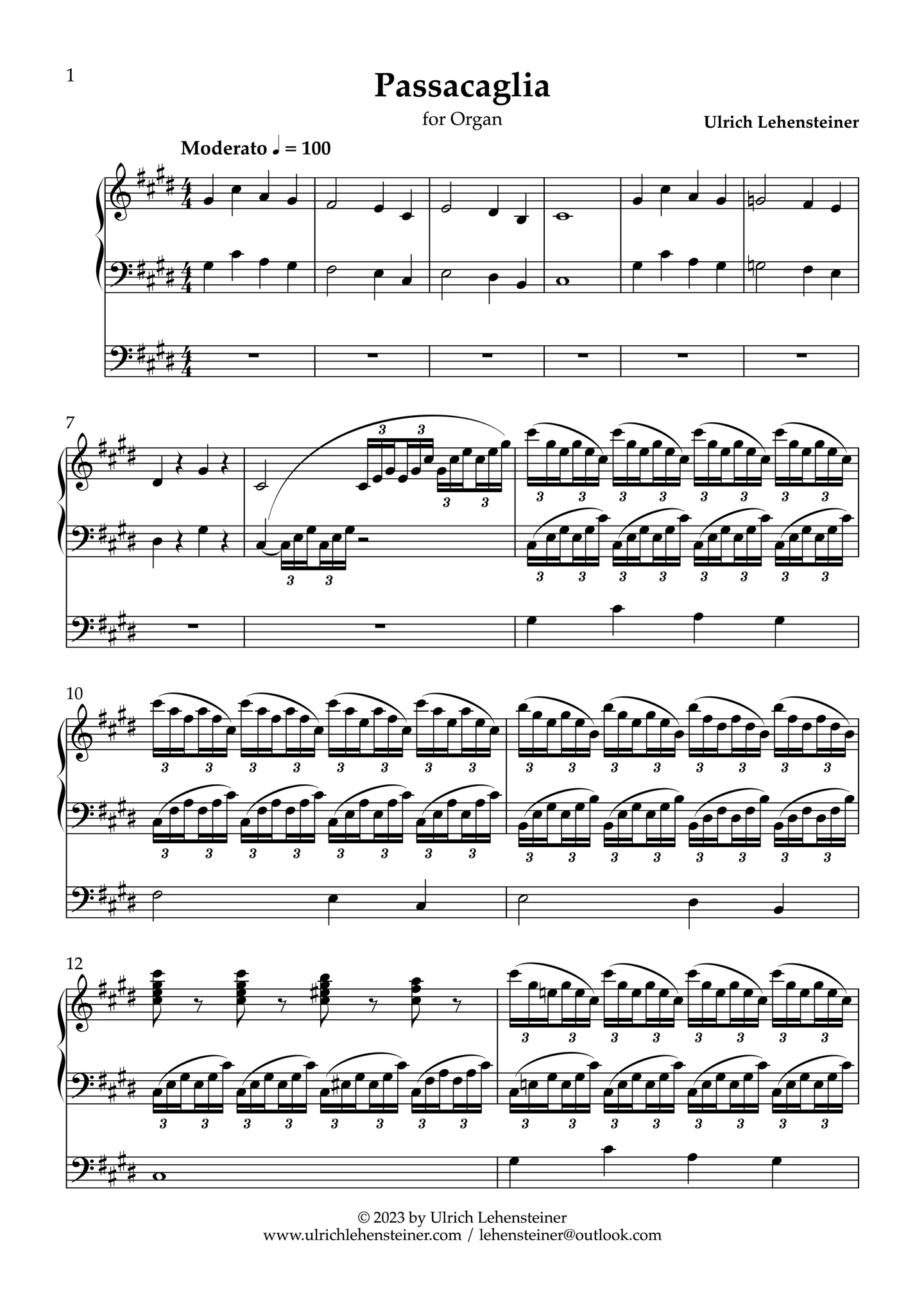
Passacaglia
A highly virtuosic piece that in terms of dexterity and flexibility fully exploits the technical capabilities of both the organ and the organist. The common continuous repetition of the main theme and therefore the formal structure of the Passacaglia itself is occasionally broken up here by short non-theme-related sequences, loosening up the usually very tight form of the genre.
Toccata in c
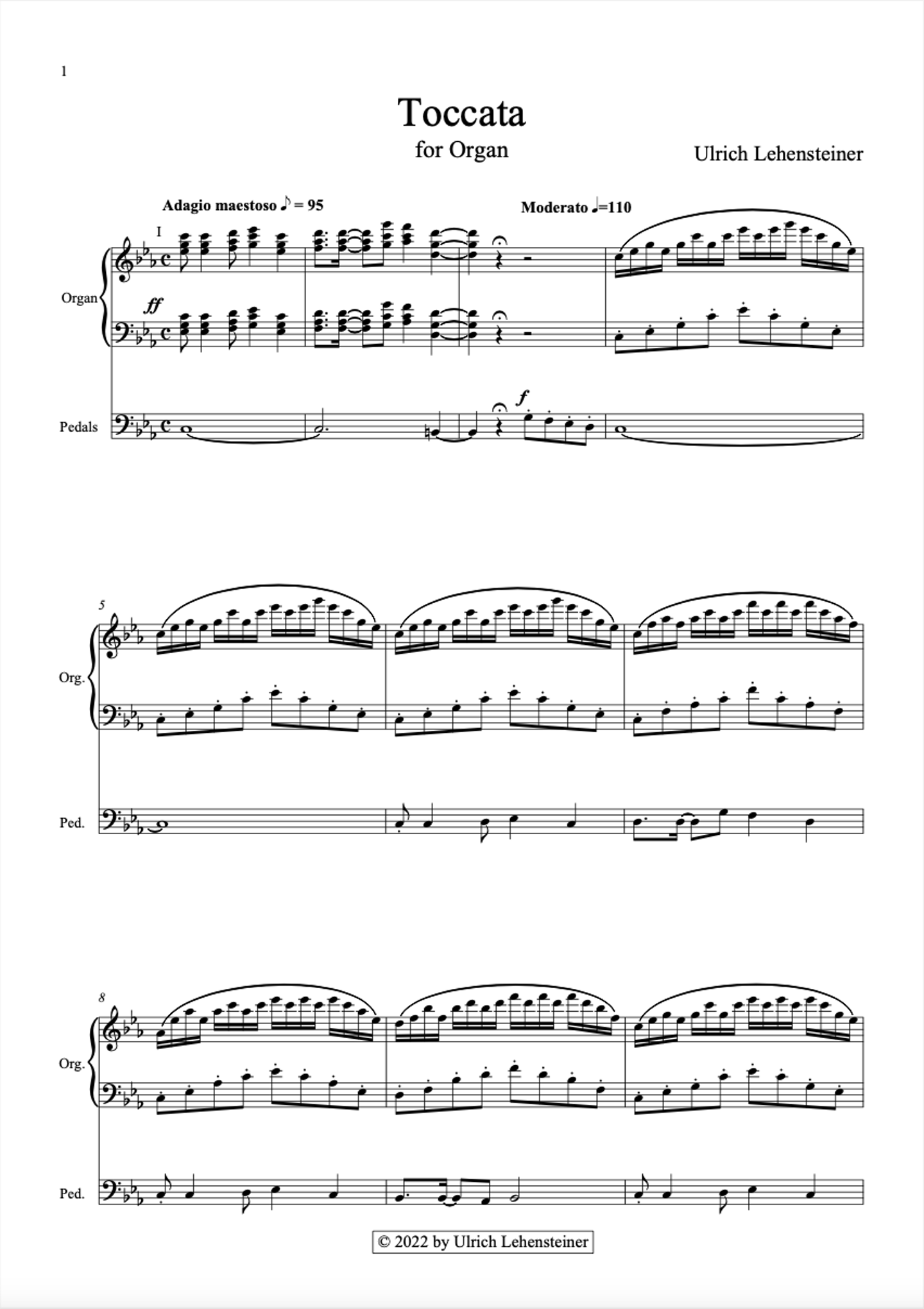
A virtuosic Toccata with and strong focus on rhythm. The majestic opening chords anticipate the boisterous main theme, which is then contrasted by a melodious middle section. Featuring wild chromatic shifts and scales and an unusually active pedal-part, this Toccata definitively delivers on that instrument's listener's classic expectations of drama and grandeur of that instrument.